
Coloplast Titan®
The Coloplast Titan® is a 3-piece inflatable penile prosthesis designed to provide controllable penile rigidity for men with erectile dysfunction who are candidates for penile implant surgery. It uses Bioflex® cylinders, a scrotal pump and a separate fluid reservoir, with a hydrophilic surface treatment that allows the implant to absorb an aqueous solution selected by the surgeon.
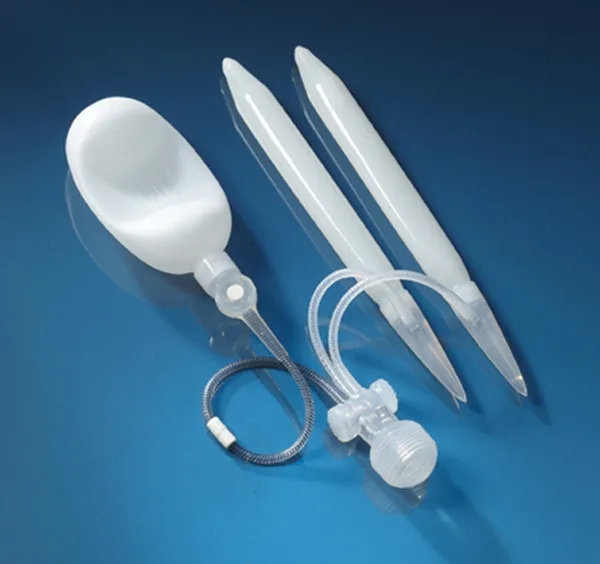
- Three-piece inflatable system — The Titan uses two intracavernosal cylinders, a scrotal pump and a separate fluid reservoir to provide patient-controlled inflation and deflation.
- Bioflex® cylinders — Titan cylinders use Coloplast's proprietary Bioflex material and are designed to provide high axial rigidity when inflated.
- Hydrophilic surface treatment — The HydroVANTAGE™ hydrophilic coating absorbs an aqueous solution chosen by the surgeon rather than containing a permanently embedded antibiotic combination.
- Lock-out™ valve technology — The reservoir incorporates a lock-out mechanism designed to reduce unintended fluid transfer and auto-inflation.
- Established prosthesis platform — Titan is an FDA-approved inflatable penile prosthesis with long-standing clinical use and published comparative evidence.
About the Coloplast Titan®
What Is the Coloplast Titan?
The Coloplast Titan is a 3-piece inflatable penile prosthesis used in the surgical treatment of erectile dysfunction.
The system is completely implanted inside the body and consists of paired inflatable cylinders, a scrotal pump and a separate fluid reservoir.
One cylinder is positioned inside each corpus cavernosum. The pump is placed within the scrotum, while the reservoir is normally positioned within the pelvis or lower abdominal region.
The patient operates the prosthesis manually. Inflation transfers fluid from the reservoir into the cylinders, producing penile rigidity. Deflation returns fluid to the reservoir and allows the penis to become softer and easier to conceal.
How the Titan Works
The Titan does not restore the natural vascular mechanism responsible for an erection.
Instead, it mechanically creates penile rigidity.
When the patient repeatedly compresses the scrotal pump, fluid moves from the reservoir into the paired cylinders. Increasing cylinder pressure produces the axial rigidity required for penetrative sexual activity.
After intercourse, the patient activates the deflation mechanism. Fluid returns to the reservoir and cylinder pressure decreases.
This hydraulic design provides a substantially greater difference between the erect and resting states than a continuously semi-rigid malleable prosthesis.
What Makes the Titan Distinctive?
Several engineering characteristics distinguish Titan from other inflatable penile prosthesis platforms.
These include its Bioflex cylinder material, hydrophilic surface treatment, Lock-out reservoir valve and Coloplast pump technology.
Titan is also available across standard and narrower configurations and multiple lengths, allowing the surgeon to match the prosthesis to different corporal anatomies.
These characteristics should not be interpreted as making Titan universally superior to another implant. Device selection depends on patient anatomy, corporal fibrosis, previous surgery, manual dexterity, expectations and surgeon experience.
Bioflex® Cylinder Material
Titan cylinders are manufactured using Coloplast's proprietary Bioflex material.
The material is engineered for penile prosthesis cylinders and is designed to provide substantial rigidity when the implant is inflated.
High cylinder rigidity can be particularly relevant when the prosthesis is being used in patients with significant penile curvature or corporal fibrosis.
However, rigidity is only one consideration when choosing a prosthesis. Concealability, cylinder dimensions, pump operation, anatomy and patient preference are also important.
Expansion Characteristics
Titan cylinders primarily provide circumferential expansion and rigidity during inflation.
The device should not be described as a penile-lengthening implant.
Cylinder length is selected according to measurements of the patient's corpora cavernosa during surgery.
Inflation can increase penile circumference and rigidity, but safe expansion remains constrained by the tunica albuginea, corporal anatomy, fibrosis and the dimensions of the implanted cylinders.
Patients should therefore not expect Titan implantation to guarantee an increase in penile length beyond their existing anatomical capacity.
Titan and Penile Rigidity
Rigidity is one of the characteristics for which Titan is frequently discussed in comparisons with other inflatable penile prostheses.
The Bioflex cylinders are designed to tolerate the pressures required to create a firm erection.
This characteristic can also be useful during penile modeling in appropriately selected patients with Peyronie's disease.
However, manufacturer bench-test comparisons of rigidity should not be interpreted as direct proof that every patient will experience a clinically superior erection compared with another modern prosthesis.
Clinical outcomes depend on many factors beyond cylinder material.
HydroVANTAGE™ Hydrophilic Coating
Titan uses a hydrophilic surface treatment marketed as HydroVANTAGE.
When the implant is immersed in an aqueous solution during preparation, the hydrophilic surface absorbs that solution.
This gives the surgeon flexibility to select an appropriate aqueous antimicrobial solution according to institutional protocol, patient factors and clinical judgment.
This is fundamentally different from an implant containing a fixed antibiotic combination incorporated into its surface.
The Titan should therefore be described as having a hydrophilic coating rather than simply being described as an "antibiotic-coated implant."
Lock-out™ Reservoir Valve
The Titan reservoir incorporates Coloplast's Lock-out valve technology.
The mechanism is designed to reduce unintended transfer of fluid from the reservoir into the cylinders.
This helps reduce the possibility of spontaneous or unintended auto-inflation when the device is not being deliberately activated.
The reservoir remains a separate component of the 3-piece hydraulic system.
Titan Pump
The Titan system uses a scrotally positioned pump.
The patient locates the pump manually through the scrotal skin and repeatedly compresses it to transfer fluid into the cylinders.
Current Titan configurations include pump technology designed to facilitate inflation and deflation.
The pump must remain accessible and comfortable enough for the patient to manipulate after healing.
Patients therefore need adequate hand strength, sensation and dexterity to operate the prosthesis reliably.
Titan Touch Pump
Coloplast offers Titan configurations using the Touch pump.
The pump is designed to simplify patient control of the hydraulic system, particularly deflation.
As with all inflatable penile prostheses, successful use depends partly on appropriate postoperative training.
Patients should learn the operation of their specific implanted configuration directly from their surgical team rather than relying on instructions for another penile implant model.
Titan Reservoir
The Titan uses a separate fluid reservoir, making it a true 3-piece inflatable penile prosthesis.
Coloplast offers reservoir configurations with its Lock-out valve technology.
The reservoir stores fluid when the implant is deflated and supplies fluid to the cylinders during inflation.
Because fluid storage is separate from the cylinders, the penis can become substantially softer when the device is deflated.
Standard and Narrow-Base Options
Not every patient has the same corporal dimensions.
Titan is available in configurations intended to accommodate different penile anatomies, including narrower-base cylinder options.
Narrower cylinders can be particularly useful when standard cylinders cannot be safely accommodated because of limited corporal diameter or selected cases of corporal fibrosis.
The surgeon determines appropriate cylinder dimensions after measuring and assessing the corpora.
Titan in Corporal Fibrosis
Corporal fibrosis can make penile prosthesis implantation technically challenging.
Fibrosis may occur after prolonged ischemic priapism, previous penile prosthesis infection or removal, intracavernosal injection complications, Peyronie's disease or previous corporal surgery.
Titan's available sizing options can make it suitable for selected fibrotic anatomies.
However, severe fibrosis may require specialized dilation, excavation, reconstruction or narrower prosthetic components.
Device selection should therefore be based on intraoperative anatomy rather than brand preference alone.
Titan for Peyronie's Disease and Erectile Dysfunction
A 3-piece inflatable prosthesis is an established surgical option for men who have Peyronie's disease combined with erectile dysfunction that does not respond adequately to medical treatment.
Cylinder inflation itself can correct part of the curvature by internally supporting the penis.
If clinically significant curvature remains after implantation, additional straightening techniques may be required.
These may include penile modeling, plication, tunical incision or grafting depending on the deformity.
Titan's cylinder rigidity makes it one of the established inflatable prostheses used in this setting.
Published comparative evidence has found both Titan and AMS 700 CX capable of providing effective penile straightening and high patient satisfaction in men with Peyronie's disease and erectile dysfunction.
Titan vs AMS 700
Titan and the Boston Scientific AMS 700 family are both established 3-piece inflatable penile prosthesis platforms.
There is no evidence supporting a simple statement that one device is universally better for every patient.
Titan uses Bioflex cylinders and a hydrophilic surface treatment that allows absorption of an aqueous solution selected during surgical preparation.
AMS 700 systems use different cylinder construction and infection-control technologies, and the AMS family includes models with different expansion characteristics.
Device selection therefore involves trade-offs involving rigidity, expansion characteristics, cylinder dimensions, pump preference, infection-prevention strategy, anatomy and surgeon experience.
Titan vs AMS 700 CX
Titan and AMS 700 CX are often compared because both are designed to provide substantial axial rigidity and controlled girth expansion.
A published comparative study in patients with Peyronie's disease and erectile dysfunction found no statistically significant difference in device survival between the two implants and reported similar effectiveness for penile straightening.
This makes patient anatomy and surgeon familiarity particularly important when choosing between the two systems.
Titan vs AMS 700 LGX
AMS 700 LGX differs from Titan because LGX is designed to provide controlled length and girth expansion during inflation.
Titan is primarily selected for rigidity and circumferential expansion rather than being marketed as a length-expanding cylinder.
This does not mean LGX automatically produces a longer penis after surgery.
Final dimensions with either device remain constrained by the patient's corporal anatomy and safe surgical sizing.
Titan vs Malleable Penile Implant
Titan is hydraulically inflatable, while a malleable implant consists of continuously semi-rigid rods.
Titan allows the patient to create rigidity when desired and return the penis to a softer state afterward.
This generally provides better concealability and a more natural transition between resting and erect states.
A malleable implant is mechanically simpler and does not require operation of a scrotal pump.
Patients with substantial limitations in hand dexterity may therefore find a malleable prosthesis easier to operate.
Reliability and Mechanical Durability
Modern inflatable penile prostheses are designed for long-term implantation, but no hydraulic device can be guaranteed to function for life.
Published outcomes vary according to study population, implantation era, definition of mechanical failure and follow-up duration.
In a comparative study of men with Peyronie's disease and erectile dysfunction, the estimated five-year mechanical survival of Titan was approximately 87%.
Another published review discussing large implant series reported approximately 89.9% five-year mechanical survival for the Mentor Alpha 1 platform that preceded the modern Coloplast Titan lineage.
These figures should be interpreted as population-level evidence rather than a prediction of exactly how long an individual patient's implant will function.
What Happens If the Titan Mechanically Fails?
Mechanical failure can affect cylinders, pump components, tubing, valves or the hydraulic circuit.
Symptoms can include inability to achieve normal rigidity, difficulty pumping, loss of inflation after pumping or inability to deflate normally.
Clinically significant mechanical failure generally requires evaluation by a prosthetic urologist.
Revision surgery may involve replacement of an individual component or replacement of the entire prosthesis depending on device age, component compatibility, operative findings and surgeon judgment.
Infection Risk
Infection is one of the most important complications of any penile prosthesis.
Titan's hydrophilic surface allows absorption of an aqueous solution selected by the surgeon as part of the operative preparation strategy.
However, no coating eliminates prosthesis infection.
Risk is also influenced by patient health, diabetes control, previous prosthetic surgery, active infection, operative technique and perioperative infection-prevention protocols.
A confirmed deep prosthetic infection may require device removal or specialist salvage surgery.
Erosion
Cylinder erosion can occur when prosthetic components gradually compromise surrounding tissue.
Distal erosion can involve the glans, corporal tissue or urethra.
Risk may be increased by infection, reduced penile sensation, previous prosthesis surgery, severe fibrosis, tissue damage or inappropriate sizing.
Suspected erosion requires specialist assessment.
Does Titan Increase Penile Length?
Titan implantation should not be presented as penile enlargement surgery.
The surgeon measures the corpora and selects cylinders that safely fit the existing anatomy.
Attempting to increase length by deliberately oversizing the prosthesis can cause excessive tissue pressure, pain, erosion and other complications.
The primary objective of Titan implantation is restoration of reliable rigidity for sexual intercourse.
Does Titan Increase Girth?
Titan cylinders expand circumferentially during inflation and therefore produce greater shaft diameter in the inflated state than in the deflated state.
Coloplast emphasizes Titan's girth-expansion characteristics in its product materials.
However, the actual postoperative penile circumference depends on the patient's anatomy, corporal fibrosis, selected cylinder size and surrounding tissues.
Titan should therefore not be described as guaranteeing a specific increase in penile girth.
Concealability When Deflated
Because Titan has a separate fluid reservoir, substantial fluid leaves the cylinders during deflation.
This allows the cylinders and penis to become considerably softer than a malleable prosthesis.
Most patients can position the deflated penis comfortably beneath clothing.
The exact resting appearance depends on anatomy, cylinder sizing, scar tissue and individual healing.
MRI Considerations
Coloplast identifies Titan penile implants as MR Conditional.
This means MRI may be performed under the specific conditions established for the device rather than assuming unrestricted MRI compatibility.
Patients should inform radiology staff that they have a penile prosthesis and provide implant information whenever possible before undergoing MRI.
Who May Be a Good Candidate for Titan?
Titan may be considered for men with erectile dysfunction who are candidates for penile prosthesis implantation and want a hydraulic device with strong rigidity and good concealability when deflated.
It may be particularly relevant when significant rigidity is important, including selected patients with Peyronie's disease or challenging corporal anatomy.
However, candidacy for penile prosthesis surgery is more important than brand selection.
The final device decision should follow assessment of penile anatomy, previous operations, fibrosis, manual dexterity, infection risk and patient priorities.
What Should Patients Weigh Before Choosing Titan?
Patients should consider the advantages of strong rigidity, hydraulic inflation, good concealability and established clinical experience against the realities of implant surgery.
Titan requires operation of a scrotal pump and contains multiple hydraulic components that can eventually fail.
The operation also carries risks including infection, erosion, pain, component malposition and revision surgery.
Patients should also understand that implantation does not guarantee increased penile length and permanently alters the corpora cavernosa.
For these reasons, the decision should focus on functional goals and realistic expectations rather than marketing comparisons between brands.
Is this device for you?
- •Men with medication-refractory erectile dysfunction who have chosen penile prosthesis surgery after appropriate counselling.
- •Patients prioritizing strong axial rigidity from an inflatable prosthesis.
- •Men with erectile dysfunction and Peyronie's disease who may benefit from prosthetic rigidity combined with modeling or additional straightening when required.
- •Patients wanting good concealability compared with a continuously semi-rigid malleable prosthesis.
- •Selected patients with narrower or fibrotic corpora where available Titan sizing configurations fit the anatomy.
- •Patients able to operate a scrotal pump and comfortable using an inflatable hydraulic system.
- •No guaranteed penile enlargement — Titan is an erectile-function prosthesis, not a lengthening procedure.
- •Requires manual dexterity — The patient must be able to locate and operate the scrotal pump.
- •Hydraulic complexity — Cylinders, pump, tubing, valves and reservoir introduce potential mechanical failure points.
- •Separate reservoir required — Implantation involves placement of a pelvic or abdominal reservoir.
- •Infection remains possible — The hydrophilic coating supports the surgical infection-prevention strategy but does not eliminate prosthesis infection.
- •Revision may eventually be required — Mechanical failure, infection, erosion or component problems can require another operation.
- •High rigidity is not automatically better for every patient — Device choice should also consider concealability, anatomy, expansion preference and surgeon experience.
- •Evidence does not establish universal superiority over AMS 700 — Both Titan and modern AMS 700 prostheses have strong clinical track records.
How it compares
Every 3-piece inflatable implant a surgeon in our network may propose, side by side. The Coloplast Titan® column is highlighted.
| Attribute | Coloplast Titan®ColoplastPremium | AMS 700™ LGXBoston ScientificPremium | AMS 700™ CXBoston ScientificPremium | Coloplast Titan® Narrow BaseColoplastMid-range | Rigicon Infla10®RigiconMid-range | Rigicon Infla10® Pulse™ AXRigicon Mid-range | AMS 700™ CXRBoston ScientificPremium | ZSI 475®Zephyr Surgical ImplantsMid-range |
|---|---|---|---|---|---|---|---|---|
| Expansion | Girth / circumferential expansion | Length + girth | Girth / circumferential expansion | Restricted girth / circumferential expansion | Model dependent — X: girth; AX: length + girth | Length + girth | Girth / circumferential expansion | Girth / circumferential expansion |
| Rigidity | High axial rigidity; Bioflex® cylinders | High hydraulic rigidity with controlled-expansion cylinders | High axial rigidity | High hydraulic rigidity for reduced-diameter corporal anatomy | High hydraulic axial rigidity | High axial rigidity; reinforced four-layer inflatable cylinders | Hydraulic rigidity optimized for narrow corporal anatomy | Hydraulic rigidity; reinforced three-layer cylinders |
| Antibiotic coating | Hydrophilic HydroVANTAGE™ coating; absorbs surgeon-selected aqueous solution — not a fixed embedded antibiotic combination | InhibiZone™ available — rifampin + minocycline; non-InhibiZone configurations also available | InhibiZone™ antibiotic treatment available; rifampin + minocycline | HydroVANTAGE™ hydrophilic coating; absorbs surgeon-selected aqueous solution rather than containing fixed embedded antibiotics | HydroShield™ hydrophilic coating; absorbs surgeon-selected aqueous solution | HydroShield™ hydrophilic coating; absorbs surgeon-selected aqueous solution | InhibiZone™ available — rifampin + minocycline; non-InhibiZone CXR configurations also exist | Hydrophilic PVP coating designed to absorb an intraoperative antimicrobial solution |
| Reservoir | Separate fluid reservoir with Lock-out™ valve; 3-piece system | Separate fluid reservoir; 3-piece system | Separate fluid reservoir; 3-piece system | Separate Titan reservoir with Lock-out™ valve; 3-piece system | Separate AdaptiveReservoir™ with lock-out mechanism | Separate AdaptiveReservoir™ with lock-out valve; 3-piece system | Separate fluid reservoir; 3-piece system | Separate saline-filled pelvic reservoir; 3-piece system |
| Control | Scrotal pump; Touch pump configurations available | Scrotal inflation/deflation pump | Scrotal inflation/deflation pump | Scrotal Titan or Titan Touch pump depending on configuration | Pulse™ scrotal pump on current generation | Pulse™ scrotal pump | TENACIO™ or MS Pump™ depending on current configuration and market | Manual scrotal pump with inflation and deflation valve |
| Concealed when soft | Yes — inflatable cylinders deflate for improved concealment | Yes — cylinders deflate for good concealability | Yes — cylinders deflate for improved concealment | Yes — cylinders deflate for improved concealment | Yes — cylinders deflate for improved concealment | Yes — inflatable cylinders soften when deflated | Yes — cylinders deflate for improved concealment | Yes — cylinders deflate as saline returns to the reservoir |
| Cylinder material | Bioflex® | — | — | Bioflex® | — | — | — | Medical-grade silicone with biocompatible polyester reinforcement |
| Cylinder options | Standard and narrow-base configurations; multiple lengths available | 12, 15, 18 and 21 cm | 12, 15, 18 and 21 cm; 24 cm available by special order | Narrow Base: 11, 14, 16 and 18 cm; penoscrotal and infrapubic configurations | Infla10 X and Infla10 AX, plus market-dependent specialized configurations | AX lengths: 12, 15, 18, 20, 22 and 24 cm | Current TENACIO configurations: 10, 12, 14, 16 and 18 cm | 13, 16 and 19 cm standard cylinders with extenders; separate 22 cm large-size configuration |
| Length expansion | Not specifically designed as a length-expanding cylinder | Yes — controlled longitudinal cylinder expansion; actual patient length change is anatomy dependent | No dedicated longitudinal-expansion design | No dedicated longitudinal-expansion design | Model dependent — AX provides controlled longitudinal expansion; X does not specifically target length expansion | Up to 25% relative cylinder expansion, manufacturer stated and anatomy dependent | No dedicated longitudinal-expansion design | No dedicated longitudinal-expansion design |
| MRI status | MR Conditional under specified conditions | MR Conditional under manufacturer-specified conditions | MR Conditional under manufacturer-specified conditions | MR Conditional under manufacturer-specified conditions | Verify current model-specific Rigicon IFU before publishing an MRI claim | Use current Rigicon implant documentation / IFU for model-specific MRI conditions before publishing an MRI claim | MR Conditional under manufacturer-specified conditions | Verify current model-specific ZSI IFU before publishing a formal MRI classification |
| Cylinder material / construction | — | Controlled-expansion multilayer cylinder with parylene-coated surfaces | Multi-layer inflatable AMS 700 CX cylinder | — | — | Multi-layer inflatable cylinder; four-layer construction | Narrow controlled-expansion AMS 700 cylinder | — |
| Cylinder construction | — | — | — | — | Multi-layer inflatable cylinder system | — | — | — |
| Girth expansion | — | — | — | — | — | Up to approximately 46 mm cylinder diameter, manufacturer stated | — | — |
| Reliability | 90–95% at 5 yrs* | 90–95% at 5 yrs* | 90–95% at 5 yrs* | 90–95% at 5 yrs* | 90–95% at 5 yrs* | 90–95% at 5 yrs* | 90–95% at 5 yrs* | 90–95% at 5 yrs* |
*Type-level five-year mechanical survival from published series; not a model-specific figure. See each model page for detail.
At a glance
- Manufacturer
- Coloplast
- Type
- 3-piece inflatable implant
- Price tier
- Premium
- Regulatory
- FDA — United States
- Warranty
- Manufacturer warranty terms vary by country, distributor and date of implantation. Patients should obtain the current written Coloplast warranty applicable in the country where the device is implanted rather than relying on a universal lifetime-warranty claim.
- 3-piece hydraulic design — Paired intracavernosal cylinders, scrotal pump and separate fluid reservoir.
- Bioflex® cylinders — Proprietary cylinder material engineered for rigidity and durability.
- HydroVANTAGE™ hydrophilic coating — Absorbs an aqueous solution selected by the surgeon during device preparation.
- Lock-out™ valve — Reservoir technology designed to reduce unintended auto-inflation.
- Touch pump option — Pump configuration designed to facilitate patient inflation and deflation.
- Standard and narrow-base configurations — Multiple sizing options accommodate different corporal anatomies.
- Girth-focused expansion — Cylinders provide circumferential expansion and rigidity rather than being specifically designed as a length-expanding implant.
- MR Conditional — Titan implants are identified by Coloplast as MR Conditional under specified conditions.
Surgeons who implant it
Surgeons in our network who work with the Coloplast Titan®. Availability of a specific model is always confirmed in your proposal.
Common questions
Is the Coloplast Titan better than the AMS 700?
How long does a Coloplast Titan last?
What antibiotic protection does the Titan have?
Is the Coloplast Titan a 3-piece implant?
Does the Coloplast Titan increase length?
Does the Coloplast Titan increase girth?
Is the Coloplast Titan good for Peyronie's disease?
Can the Titan inflate by itself?
Can I have an MRI with a Coloplast Titan?
Can a Coloplast Titan be replaced?
Patient reviews
Been treated? Your honest review of Coloplast Titan® helps the next patient.
No one has reviewed this yet. If you have been treated, your experience would help the next person.
Write the first reviewSources
- Coloplast — Titan® Penile Implants
- FDA — Titan Inflatable Penile Prosthesis, PMA P000006
- Chung et al. — Comparison between AMS 700 CX and Coloplast Titan inflatable penile prosthesis for Peyronie's disease treatment and remodeling
- Preoperative Counseling and Expectation Management for Inflatable Penile Prosthesis Implantation
- Penile Prosthetic Surgery for the Management of Peyronie's Disease
- EAU Guidelines — Management of Erectile Dysfunction
- AUA — Erectile Dysfunction Guideline
- Coloplast — product information