
Skip to content
Procedure

Penile Prosthesis Revision Surgery

Penile prosthesis revision surgery is an operation performed to repair, reposition, replace, or remove a previously implanted penile prosthesis when it develops mechanical failure, malposition, erosion, persistent device-related problems, or other complications. Revision surgery is generally more complex than first-time penile implant surgery because scar tissue and altered anatomy may be present, and the surgical approach depends on the existing implant and the reason for revision.
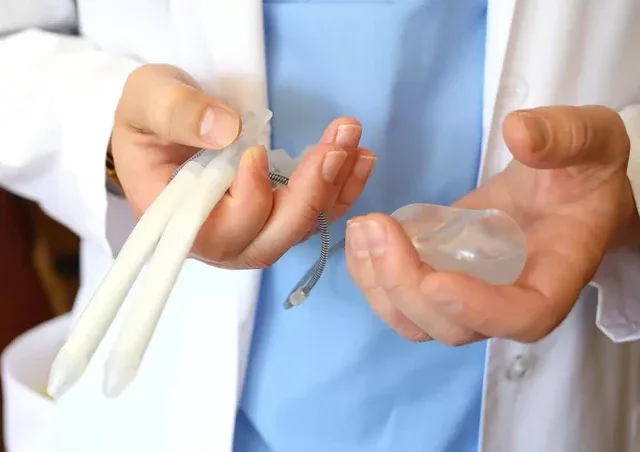
AnaesthesiaGeneral
Operating time60–180 min
Hospital stay1–2 nights
Days in Türkiye6–10 days
Back to work2–4 weeks for desk-based work
Penile Prosthesis Complications✓ Clinician-reviewed information
Key takeaways
  • Penile prosthesis revision surgery repairs, replaces or repositions a penile implant that is no longer functioning properly or has developed a complication.
  • Common reasons for revision include mechanical failure, cylinder or pump problems, device malposition, erosion, persistent pain and problems following previous implant surgery.
  • Revision surgery is usually more complex than first-time implantation because scar tissue and altered anatomy may be present.
  • A multicenter study reported that 93% of revision cases resulted in a functioning inflatable penile prosthesis, although outcomes depend strongly on the reason for revision and individual anatomy.
  • Infection, erosion and severe corporal fibrosis can require more complex reconstructive or salvage strategies.

About penile prosthesis revision surgery

Penile prosthesis revision surgery is a second or subsequent operation performed on a previously implanted penile prosthesis.

The objective is to correct a problem with the existing implant while restoring safe, comfortable and reliable prosthesis function whenever possible.

A revision may involve:

  • Replacing the entire prosthesis

  • Replacing selected components

  • Repositioning a cylinder

  • Correcting pump position

  • Managing reservoir problems

  • Correcting device malposition

  • Treating erosion

  • Removing a malfunctioning device

  • Reimplanting a new prosthesis

  • Managing corporal fibrosis

  • Reconstructing damaged corporal tissue

The exact operation is therefore individualized.

Why might a penile implant need revision?

Penile prostheses are designed for long-term use, but they are mechanical medical devices and cannot be expected to function indefinitely without the possibility of complications.

One of the most common reasons for revision is mechanical failure.

A multicenter analysis of revision surgery found mechanical failure accounted for approximately 65% of revisions in that cohort.

Other reasons include:

  • Infection

  • Erosion

  • Cylinder malposition

  • Cylinder crossover

  • Distal cylinder problems

  • Pump malfunction

  • Pump malposition

  • Reservoir malfunction

  • Reservoir migration

  • Tubing failure

  • Fluid leakage

  • Persistent pain

  • Corporal deformity

  • Unsatisfactory device positioning

The problem can develop months or many years after the original implantation.

Is revision surgery the same as penile implant replacement?

Not exactly.

Penile prosthesis revision surgery is the broader concept.

A revision may involve:

  • Repair

  • Repositioning

  • Component exchange

  • Complete device replacement

  • Removal and reconstruction

Penile prosthesis replacement specifically means replacing an existing prosthesis with another device.

Therefore, replacement is one form of revision surgery.

Is revision surgery more difficult than the first penile implant operation?

Often, yes.

After the original operation, scar tissue naturally forms around the implanted components.

Additional fibrosis can develop after:

  • Previous revision surgery

  • Infection

  • Erosion

  • Implant removal

  • Priapism

  • Penile trauma

  • Multiple previous penile operations

The surgeon may therefore encounter altered anatomy and reduced corporal space.

This can make:

  • Cylinder removal

  • Corporal dilation

  • New cylinder placement

  • Reservoir removal

  • Device sizing

more technically challenging than during primary implantation.

Revision surgery should therefore ideally be performed by a surgeon experienced in penile prosthetic and reconstructive surgery.

What happens during penile implant revision surgery?

The operation depends on the reason for revision.

The surgeon first evaluates the existing prosthesis and determines which components require correction.

For an inflatable prosthesis, these may include:

  • Cylinders

  • Scrotal pump

  • Reservoir

  • Tubing

  • Connectors

The old device may then be partially or completely removed.

Depending on the circumstances, the surgeon may:

  • Replace the complete system

  • Replace or reposition components

  • Correct cylinder position

  • Reconstruct corporal tissue

  • Address fibrosis

  • Perform surgical washout

  • Implant a new prosthesis

The final strategy may sometimes change during surgery after the actual condition of the implant and surrounding tissue becomes visible.

Complete replacement vs partial component revision

A malfunction may appear to involve only one component.

However, replacing only the defective component is not always the best strategy.

A multicenter study comparing complete device exchange with partial component exchange found higher crude rates of infection and noninfectious complications in patients undergoing partial exchange. Infection occurred in 7.1% after partial exchange versus 2.2% after complete exchange, while noninfectious complications occurred in 21.2% versus 9.5%. The authors cautioned that patient and operative differences influence these findings.

The appropriate strategy therefore depends on:

  • Age of the implant

  • Device model

  • Failed component

  • Presence of infection

  • Condition of remaining components

  • Previous operations

  • Surgeon assessment

What if significant penile fibrosis is present?

Corporal fibrosis can make revision substantially more difficult.

Dense scar tissue may prevent straightforward placement of new cylinders.

Specialized techniques may be necessary to recreate adequate corporal space.

The surgeon may also choose narrower prosthesis cylinders in selected cases.

Severe fibrosis is particularly relevant after:

  • Previous infected implant

  • Previous implant removal

  • Multiple revisions

  • Prolonged ischemic priapism

  • Severe penile trauma

This is why Penile Fibrosis should be a secondary condition relationship on your platform.

What if the implant is infected?

Active penile prosthesis infection requires a different decision pathway from uncomplicated mechanical revision.

Depending on the circumstances, management may involve:

  • Device removal

  • Surgical washout

  • Immediate salvage and replacement in selected patients

  • Delayed reimplantation

Do not present routine mechanical revision and infected-prosthesis salvage as identical procedures.

For Andrology Abroad, I recommend creating a separate procedure page:

Penile Prosthesis Salvage Surgery

That page can properly cover infected implants.

What if the implant has eroded?

Erosion occurs when part of the prosthesis damages or passes through surrounding tissue.

Potential structures include:

  • Corporal tissue

  • Urethra

  • Glans

  • Penile skin

  • Scrotal skin

Treatment depends on the location and severity of erosion and whether infection is present.

Device exposure or suspected erosion requires prompt urological evaluation.

Revision surgery after previous implant removal

Men who previously had a prosthesis removed can develop substantial corporal fibrosis.

Over time, scar tissue may:

  • Contract

  • Reduce corporal space

  • Contribute to penile shortening

  • Make later implantation more difficult

Reimplantation can therefore require complex prosthetic techniques.

Patients seeking revision abroad should provide as much information as possible about all previous penile operations.


Outcomes
A multicenter study of 214 penile prosthesis revision operations reported that 93% of cases were successfully revised with a functioning inflatable penile prosthesis. The study involved clinically uninfected revision procedures and should not be interpreted as a universal 93% success guarantee for every revision case.

Who it is for

✓ May be suitable if
  • Your penile implant has mechanical failure or no longer works reliably.
  • The implant no longer inflates, stays inflated, or deflates normally.
  • A cylinder, pump, reservoir, tubing, or connector has malfunctioned.
  • The prosthesis has become displaced, asymmetric, or malpositioned.
  • You have cylinder crossover, migration, or another correctable positioning problem.
  • You have persistent implant-related pain caused by device position or mechanical problems.
  • You need replacement of an older or failed penile prosthesis.
  • You previously had a penile implant removed and are being evaluated for reimplantation.
  • You have corporal fibrosis but still have anatomy suitable for reconstructive implant surgery.
  • You are medically fit for anesthesia and elective surgery.
  • There is no untreated urinary, wound, or systemic infection.
  • You understand that revision surgery is usually more complex than first-time implantation and that another revision may be required in the future.
✕ Not suitable if
  • You have an active urinary tract infection that has not been treated.
  • You have an untreated systemic infection.
  • There is active wound infection or significant infected tissue around the implant.
  • You have fever, wound drainage, exposed hardware, or suspected acute prosthesis infection that requires an urgent infection-specific treatment plan rather than routine revision.
  • Diabetes or another major medical condition is poorly controlled and makes elective surgery unsafe.
  • You are not medically fit for anesthesia or surgery.
  • You are taking anticoagulant or antiplatelet medication that cannot be managed safely around surgery.
  • You expect revision surgery to guarantee additional penile length or girth.
  • Your main concern is cosmetic dissatisfaction despite a normally functioning and correctly positioned implant, unless a reconstructive problem is objectively present.

Preparing for surgery

Send the medical team details of the original penile implant surgery.
Provide the implant manufacturer, model and implant card if available.
Send reports from all previous penile prosthesis operations.
Tell the surgeon how many previous implant or revision procedures you have undergone.
Describe exactly how the implant is malfunctioning.
Report any pain, swelling, drainage, fever or skin changes.
Provide photographs only if specifically requested through a secure clinical channel.
Inform the team about diabetes and recent HbA1c results.
Provide a complete medication list.
Tell the team about anticoagulants and antiplatelet medications.
Do not independently stop prescribed blood thinners; follow the surgeon and prescribing physician's instructions.
Complete requested blood tests.
Complete urinalysis and/or urine culture when requested.
Treat active urinary or systemic infection before elective revision.
Stop smoking before surgery when possible.
Follow fasting instructions before anesthesia.
Arrange sufficient time in Turkey for postoperative review before flying home.

What recovery looks like

Day 0 — Surgery
On the day of surgery, the existing penile prosthesis is repaired, repositioned, partially replaced, or completely exchanged depending on the problem identified. Most patients remain under observation after anesthesia, and a urinary catheter may be used temporarily in some cases. Pain, swelling, and bruising are expected during the first hours after the procedure.
Days 1–3 — Early recovery
During the first few days, penile and scrotal swelling, bruising, tenderness, and incisional discomfort are common. Patients are usually encouraged to walk gently and avoid prolonged bed rest, while heavy lifting, strenuous activity, and unnecessary manipulation of the implant should be avoided. Pain medication and any other prescribed postoperative treatment should be taken exactly as directed.
Days 4–7 — First postoperative review
By the end of the first week, pain and swelling should generally begin to improve, although some bruising may still be present. The surgeon usually reviews the incision, device position, wound healing, and any signs of infection or abnormal swelling. For international patients, this is an important period for an in-person follow-up before being cleared to travel home.
Week 2 — Returning to light daily activity
During the second week, many patients become more comfortable walking, sitting, and performing normal daily activities. Some men with desk-based jobs may be able to return to work if pain and swelling are well controlled, although recovery can take longer after complex revision, fibrosis surgery, or multiple previous implant operations.
Weeks 3–4 — Continued healing
By weeks three to four, swelling and tenderness usually continue to decrease and the surgical wounds should be well advanced in healing. Most patients can gradually increase routine activity, but heavy exercise, cycling, strenuous lifting, and sexual activity should still be avoided until the surgeon confirms that healing is adequate.
Weeks 4–6 — Device activation and cycling
For inflatable penile prostheses, the surgeon may begin or resume device cycling once the tissues have healed sufficiently. The patient is taught how to inflate and deflate the prosthesis correctly and may be asked to cycle the implant regularly to maintain comfort and function. The exact timing varies depending on the complexity of the revision and the surgeon's protocol.
Around Week 6 and beyond — Return to sexual activity
Many patients can gradually return to sexual activity around six weeks after surgery once the incision has healed, pain has resolved, and the surgeon has confirmed that the prosthesis is functioning properly. Men who underwent complex reconstruction, treatment for erosion, severe corporal fibrosis, or infection-related surgery may need a longer recovery before intercourse is considered safe.

Risks and complications

Infection
Revision surgery carries a greater infection concern than uncomplicated first-time implantation because an existing device and scar capsule have already been present. In a multicenter study of noninfected revisions using a revision-washout protocol, 5.7% developed infection or impending extrusion/erosion.
Recurrent mechanical failure
A revised or replacement prosthesis remains a mechanical device and can eventually malfunction. No penile prosthesis can be guaranteed to function for life.
Erosion or extrusion
A cylinder or another component can damage surrounding tissue or become exposed.
Corporal fibrosis
Scar tissue may already be present and can increase after repeated operations. Fibrosis can make future revision more difficult.
Penile shortening or perceived loss of length
Some patients perceive reduced penile length after revision, particularly when there is: Longstanding ED, Peyronie's disease, Fibrosis, Previous infection, Multiple operations. Revision surgery should not be marketed as guaranteed penile-length restoration.
Pain
Temporary postoperative pain is expected. Persistent pain can occasionally continue and may require further assessment.
Cylinder malposition
Cylinders can become: Asymmetric, Distally displaced, Proximally displaced , Crossed. Further revision may occasionally be required.
Pump or reservoir problems
Inflatable prostheses can develop: Pump malposition, Reservoir migration, Tubing problems ,Fluid leakage.
Urethral injury
Revision of heavily scarred corporal tissue can increase technical difficulty and risk of urethral injury.
Bleeding or hematoma
Bleeding can cause penile or scrotal hematoma.
Wound problems
Possible complications include: Delayed healing, Wound separation, Drainage, Skin problems,
Need for another revision
Revision surgery cannot guarantee that another operation will never be necessary. A penile prosthesis may require further revision later because of mechanical wear, infection, erosion or another complication.

Common questions

What is penile prosthesis revision surgery?
It is surgery performed on an existing penile implant to repair, reposition, replace or remove the device because of mechanical failure, malposition, erosion, pain or another complication.
What is the most common reason for penile implant revision?
Mechanical failure is an important reason. In one multicenter revision series, approximately 65% of revisions were performed because of mechanical failure.
How do I know if my penile implant has failed?
Possible signs include: Implant will not inflate, Implant loses rigidity, Implant will not deflate, Pump does not work normally, One cylinder inflates differently, Device feels displaced, New penile asymmetry, New persistent pain. A prosthetic urologist should determine the actual cause before revision.
Does the whole penile implant have to be replaced?
Not always. Some problems can potentially be managed by correcting or replacing a component. However, complete exchange may be preferred in some situations. A multicenter study found higher crude infectious and noninfectious complication rates following partial component exchange compared with complete exchange, although treatment selection must be individualized.
Can I change penile implant brand during revision?
Potentially, yes. Changing manufacturer or model may be possible, but suitability depends on: Anatomy, Corporal dimensions, Fibrosis, Existing device, Reason for revision, Surgeon preference , Device availability. The decision should be clinical rather than purely brand-based.
Can a malleable implant be changed to an inflatable implant?
In selected patients, yes. Conversion may be possible if: - Corporal anatomy permits it - Tissue quality is adequate - Infection is absent - The patient can operate an inflatable device Previous surgery and fibrosis can make conversion more complex.
Can an inflatable implant be changed to a malleable implant?
Yes, in selected cases. A malleable prosthesis may be considered based on: Hand dexterity, Anatomy, Previous complications, Patient preference, Reconstructive requirements,
Is revision surgery harder than the first implant?
It can be. Scar tissue and altered anatomy from the original surgery can make removal and replacement more difficult. Multiple previous operations, infection and corporal fibrosis further increase complexity.
What is the success rate of penile implant revision?
A multicenter study of 214 revision procedures reported that 93% were successfully revised with functioning inflatable prostheses. This should not be interpreted as a guaranteed individual success rate.
Is infection risk higher with revision surgery?
Revision surgery has historically been associated with greater infection risk than first-time implantation. Modern infection-control strategies, coated devices and revision washout protocols have improved outcomes. In an earlier multicenter study, revision washout reduced infection from 11.6% without washout to 2.86% with washout in noninfected revision cases.
What is revision washout?
Revision washout involves irrigating the implant spaces during revision surgery with solutions intended to reduce bacterial contamination before placement of the replacement prosthesis. The precise protocol varies by surgeon and clinical circumstances.
What happens if my implant is infected?
An infected penile prosthesis requires prompt specialist evaluation. Management may involve: Device removal Washout Immediate salvage replacement in selected patients Delayed reimplantation This differs from routine revision for mechanical failure.
Can an infected penile implant be revised immediately?
In selected cases, immediate salvage surgery may be possible. Not every patient or infection is suitable for immediate replacement. Severe tissue damage, systemic illness and other clinical factors can change the treatment plan.
Can revision surgery restore penile length?
Revision surgery is primarily intended to restore safe prosthesis function. Some reconstructive strategies may address deformity or severe fibrosis, but patients should not be promised additional penile length.
Can severe penile fibrosis still be treated with an implant?
Often, yes. Experienced prosthetic surgeons may use specialized techniques to create adequate corporal space. Severe fibrosis makes the operation more complex and may limit device options.
How long does penile implant revision surgery take?
Approximately 1–3 hours is a reasonable planning range. Simple revisions may be shorter, while complex fibrosis, erosion or reconstructive cases may take longer.
How long should I stay in Turkey?
For an uncomplicated planned revision, approximately 6–10 days is a reasonable international-patient planning range. The surgeon may recommend longer if the case involves infection, erosion, extensive reconstruction or other complications.
When can I fly after revision surgery?
This depends on: Extent of surgery, Bleeding risk, Mobility, Pain, Swelling, Other medical conditions, Flight duration. International patients should be reviewed by the surgeon before flying home rather than relying on a fixed universal day.
When can I return to work?
Many patients with nonphysical jobs may return within approximately 2–4 weeks, depending on recovery and surgical complexity. Heavy manual work may require longer.
When can I have sex after revision surgery?
Sexual activity is usually delayed until adequate healing has occurred and the surgeon has cleared use of the prosthesis. A commonly used timeframe is around 4–6 weeks or longer, depending on the operation.
Will I receive a new implant card?
If a new prosthesis or major components are implanted, patients should receive documentation identifying the new device whenever available. Keep this information permanently because it can be important if another revision is ever required.
What information should I send before travelling for revision?
Ideally send: Implant card Device manufacturer Device model Date of implantation Operative report Previous revision reports Infection history Current symptoms Medical conditions Current medications This allows the prosthetic surgeon to plan the case before international travel.
Can I travel abroad for penile implant revision?
Yes, planned nonemergency revision surgery can be suitable for medical travel when performed at a center experienced in prosthetic urology. However, fever, wound drainage, exposed implant material, rapidly worsening swelling or suspected acute infection should be assessed urgently where you are rather than waiting to travel internationally.
Which doctor should perform penile prosthesis revision?
Ideally, revision should be performed by a prosthetic urologist/andrologist with substantial experience in penile implant revision and reconstructive surgery. Revision is generally more technically demanding than primary implantation.

Patient reviews

Been treated? Your honest review of Penile Prosthesis Revision Surgery helps the next patient.

Write a review
No reviews yet

Be the first to share your experience of this procedure. We read and verify every review before it is published.

Write the first review

Sources

  1. An outcomes analysis of over 200 revision surgeries for penile prosthesis implantation: a multicenter study https://pubmed.ncbi.nlm.nih.gov/22082149/
  2. Revision washout decreases penile prosthesis infection in revision surgery: a multicenter study https://pubmed.ncbi.nlm.nih.gov/15592039/
  3. Partial Component Exchange of a Non-Infected Inflatable Penile Prosthesis is Associated With a Higher Complication Rate https://pubmed.ncbi.nlm.nih.gov/36669572/
  4. Efficacy and patient satisfaction associated with penile prosthesis revision surgery https://pubmed.ncbi.nlm.nih.gov/17087801