
Skip to content
Condition

Erectile dysfunction

Erectile dysfunction (ED) is the persistent difficulty getting or keeping an erection firm enough for sex, lasting three months or more. It affects roughly 20–50% of adult men, rising sharply with age, and most cases are treatable without surgery.

Also known as: ED, impotence
Symptoms5 listed
ICD-10N52.9
Treatable8 options
Erectile dysfunction explained✓ Clinician-reviewed information
Key takeaways
  • Erectile dysfunction means regularly struggling to get or keep an erection firm enough for sex. An occasional off night is not ED.
  • It's often a vascular problem before it's a "sexual" one — the same blood vessel damage that causes heart disease can cause ED, sometimes years earlier.
  • Roughly 20–50% of adult men experience some degree of ED, and the likelihood rises sharply with age.
  • Most cases respond to non-surgical treatment. Surgery (a penile implant) is usually a later option, not a first one, and it is permanent.
  • A sudden change in erections, especially in a man under 40 with no other risk factors, is worth checking rather than ignoring.

Overview

Erectile dysfunction (ED) is the persistent difficulty getting or keeping an erection firm enough for satisfactory sex. "Persistent" is the key word. Clinical guidelines generally define ED as a problem lasting at least three months, because almost every man has an occasional erection that doesn't cooperate — after a bad night's sleep, too much alcohol, or a stressful week. That, on its own, is not ED. It becomes a condition worth investigating when it's the pattern rather than the exception.

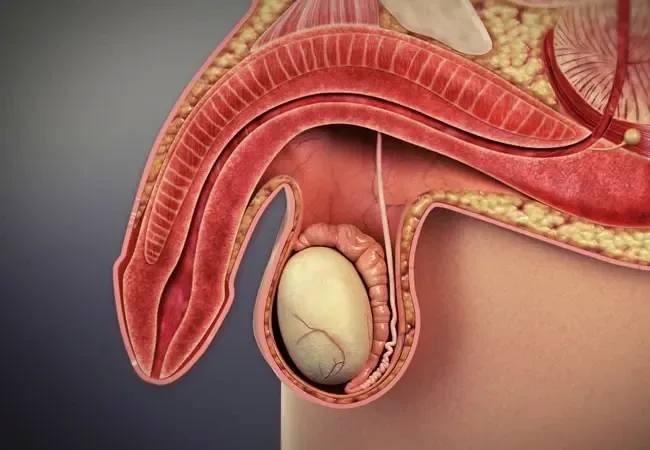
It helps to think of ED as a symptom rather than a single disease. An erection depends on several systems working together at once: healthy blood vessels to carry blood into the penis, healthy nerves to trigger the response, the right hormonal balance, and a mental state that allows arousal to happen. If any one of these is disrupted, erections can become unreliable. This is why the European Association of Urology (EAU) and the American Urological Association (AUA) both recommend identifying the underlying cause before deciding on treatment, rather than treating ED as one uniform problem with one uniform fix.

This distinction matters practically. A man in his 20s whose ED appears only with a new partner, and not during masturbation or on waking, is describing a very different picture from a man in his 50s whose erections have gradually weakened across every situation. The first pattern points towards anxiety or psychological factors. The second points more towards a physical cause — often vascular. Most men, in practice, fall somewhere between the two: a physical issue is present, and worry about performance then makes it worse. This is called mixed ED, and it's the most common presentation seen in clinical practice.

There's a second reason ED deserves attention beyond the bedroom. The blood vessels supplying the penis are narrow, so they tend to show signs of atherosclerosis — the hardening and narrowing of arteries — earlier than the larger vessels supplying the heart. Because of this, new ED in a man with no obvious cause is sometimes described as an early warning sign, appearing before other symptoms of cardiovascular disease show up. This doesn't mean every case of ED signals heart disease. It means that when ED appears suddenly and without explanation, ruling out cardiovascular and metabolic causes is a reasonable first step, not an overreaction.

ED is also extremely common, and becomes more common with age — a pattern covered in more detail below. That commonality is worth sitting with for a moment: this is not a rare or shameful malfunction. It is one of the most frequently reported issues in men's health, and one with a wide range of well-evidenced treatment options, most of which don't involve surgery at all.

Types of erectile dysfunction

Psychogenic ED
Caused by psychological factors: stress, anxiety (including performance anxiety), depression, or relationship difficulties. Often shows up as ED with a partner but normal erections during masturbation or on waking.
Organic ED
Caused by a physical problem: reduced blood flow, nerve damage, hormonal imbalance, or medication side effects. Tends to develop gradually.
Mixed ED
The most common pattern in practice. A physical problem is present, and anxiety about performance makes it worse.
Primary ED
The man has never reliably achieved erections suitable for sex. Uncommon, and usually investigated differently from secondary ED.
Secondary ED
Erections were previously normal and have become unreliable. This is the pattern most men mean when they say "ED."
How common is it?
Estimates vary depending on definition and age group, but a 2026 systematic review of studies published between 2010 and 2024 found that roughly 20–50% of adult men experience some degree of erectile dysfunction. Age is the strongest driver of that range: fewer than 5–10% of men under 40 are affected, rising to over 50–60% of men over 70.
Source: doi.org

Symptoms

Difficulty getting an erection, even when aroused
Difficulty keeping an erection long enough to finish sex
Reduced firmness compared to previous erections
Reduced frequency of spontaneous erections (including on waking)
Avoiding sex or intimacy due to worry about performance

Causes

Reduced blood flow to the penis (often from atherosclerosis)
Nerve damage (from diabetes, spinal injury, or pelvic surgery)
Low testosterone or other hormonal imbalance
Side effects of medication, including some antidepressants, blood pressure drugs, and antihistamines
Psychological factors: stress, anxiety, depression
Peyronie's disease (scar tissue causing curvature that can affect function)
Pelvic or prostate surgery, particularly prostatectomy

Risk factors

Type 1 or type 2 diabetes
Cardiovascular disease or high blood pressure
Smoking
Obesity
High cholesterol
Low physical activity
Heavy alcohol use
Depression or chronic stress
Certain prescription medications
Age (risk increases with age, though ED is not an inevitable part of ageing)

How it is diagnosed

Diagnosis usually starts with a conversation, not a test. A doctor will typically ask how long the problem has lasted, whether it happens in all situations or only some, and about general health, medications, and mood. Many clinics use a short questionnaire, such as the International Index of Erectile Function (IIEF), to describe severity consistently.

A physical exam and blood tests — checking blood sugar, cholesterol, and testosterone — are common next steps, since ED is often linked to conditions like diabetes or heart disease that haven't yet been diagnosed. Further tests, such as a Doppler ultrasound to check blood flow or nocturnal erection monitoring, are used in specific cases rather than routinely.

When to see a doctor
  • The problem has lasted more than a few weeks and isn't improving
  • ED appears suddenly, especially without an obvious stressor
  • You have chest pain, dizziness, or breathlessness during sex — this needs urgent medical attention, not a urology appointment
  • ED is affecting your mood, confidence, or relationship
  • You have risk factors like diabetes or heart disease and haven't had them checked recently

Treatment options

1Low-intensity shockwave therapy for EDLow-intensity shockwave therapy for ED explained: honest success rates, what a session involves, and what current evidence really shows.2Penile revascularisation surgeryPenile revascularisation surgery explained: who it genuinely helps, realistic success rates, and honest risks — with sources, not guesswork.3P-Shot for erectile dysfunctionThe P-Shot is a trademarked platelet-rich plasma (PRP) injection marketed for erectile dysfunction and penile enhancement. This is genuinely one of the least settled treatments covered on this site: pooled meta-analyses of generic PRP show a modest positive signal over placebo, but a well-designed, double-blind, placebo-controlled trial found no benefit at all, the branded P-Shot protocol itself has no independent peer-reviewed trial testing it directly, and the European Association of Urology currently classifies PRP as experimental, to be used only within clinical trials.4Penile Prosthesis with Peyronie’s CorrectionPenile prosthesis with Peyronie’s correction is a reconstructive procedure for men who have both Peyronie’s disease and significant erectile dysfunction that does not respond adequately to conservative treatment. A penile prosthesis is implanted to restore reliable rigidity, while additional straightening techniques such as modeling, plication, or plaque incision and grafting may be used during the same operation when the implant alone does not adequately correct the curvature.5Penile Corporal Reconstruction for Severe FibrosisPenile corporal reconstruction is complex reconstructive surgery used when severe fibrosis has replaced or contracted the erectile tissue inside the corpora cavernosa, making conventional penile prosthesis implantation difficult or impossible. The procedure releases or removes obstructive scar tissue, recreates adequate corporal space and, in most severe erectile-dysfunction cases, is performed together with placement of a penile prosthesis.6Penile Venous Ligation & Venous Leak EmbolisationPenile venous leak, properly called corporal veno-occlusive dysfunction, is the failure of the penis to trap blood during an erection — blood enters normally but drains away too quickly, so the erection starts and then fades. Two interventions target it directly: surgical ligation, in which the leaking veins are tied off through an incision, and venous leak embolisation, in which an interventional radiologist blocks the leaking veins from the inside using a liquid embolic agent through a needle puncture. Surgical ligation is no longer recommended by international urological guidelines because its results do not last. Embolisation is a newer, minimally invasive approach with encouraging prospective data at one to two years, and it is the version of this treatment we will discuss with you.7عملية دعامة القضيبعملية دعامة القضيب: نسب الرضا الحقيقية، وما تتضمنه الجراحة، والمخاطر بصراحة — بمصادر لا بتخمين.8Penile implant surgeryPenile implant surgery explained: real satisfaction rates, what the operation involves, and honest risks — with sources, not guesswork.
Reducing your risk
  • Managing blood pressure, cholesterol, and blood sugar
  • Stopping smoking
  • Reducing alcohol intake
  • Regular physical activity
  • Maintaining a healthy weight
  • Addressing depression, anxiety, or chronic stress
  • Reviewing medications with a doctor if ED started after a new prescription

Common questions

Is erectile dysfunction just part of getting older?
Ageing increases the risk, but ED is not something you simply have to accept. It's frequently linked to treatable causes such as high blood pressure, diabetes, or low activity levels. Many men see improvement once the underlying cause is addressed.
Can erectile dysfunction be reversed, or is it permanent?
It depends on the cause. ED linked to lifestyle factors, medication, or anxiety often improves with treatment or changes to that underlying cause. ED linked to nerve damage or long-standing vascular disease may be more persistent, which is why diagnosis matters before assuming a fixed outcome.
Does erectile dysfunction mean I have heart disease?
It depends on the cause. ED linked to lifestyle factors, medication, or anxiety often improves with treatment or changes to that underlying cause. ED linked to nerve damage or long-standing vascular disease may be more persistent, which is why diagnosis matters before assuming a fixed outcome.
What's the difference between erectile dysfunction and low libido?
ED is a physical difficulty achieving or maintaining an erection. Low libido is reduced interest in sex. They can occur together but have different causes and are assessed differently — a man can have strong desire and still experience ED, or vice versa.

Sources

  1. European Association of Urology (EAU) Guidelines on Sexual and Reproductive Health — https://uroweb.org/guidelines/sexual-and-reproductive-health
  2. NIDDK, "Erectile Dysfunction" https://www.niddk.nih.gov/health-information/urologic-diseases/erectile-dysfunction NHS, "Erectile dysfunction (impote
  3. NHS, "Erectile dysfunction (impotence) https://www.niddk.nih.gov/health-information/urologic-diseases/erectile-dysfunction NHS, "Erectile dysfunction (impo
  4. Sarnoski S, et al. "Global Prevalence of Erectile Dysfunction in Adult Men: A Systematic Review (2010–2024)." J Sex Med. 2026;23(Suppl_4):qdag118.270. https://doi.org/10.1093/jsxmed/qdag118.270
  5. Feldman HA, et al. Massachusetts Male Aging Study, J Urol. 1994;151(1):54-61 — historical reference only; still underpins much current guidance but the data itself is from 1994. https://pubmed.ncbi.nlm.nih.gov/8254833/