
Spermatocelectomy
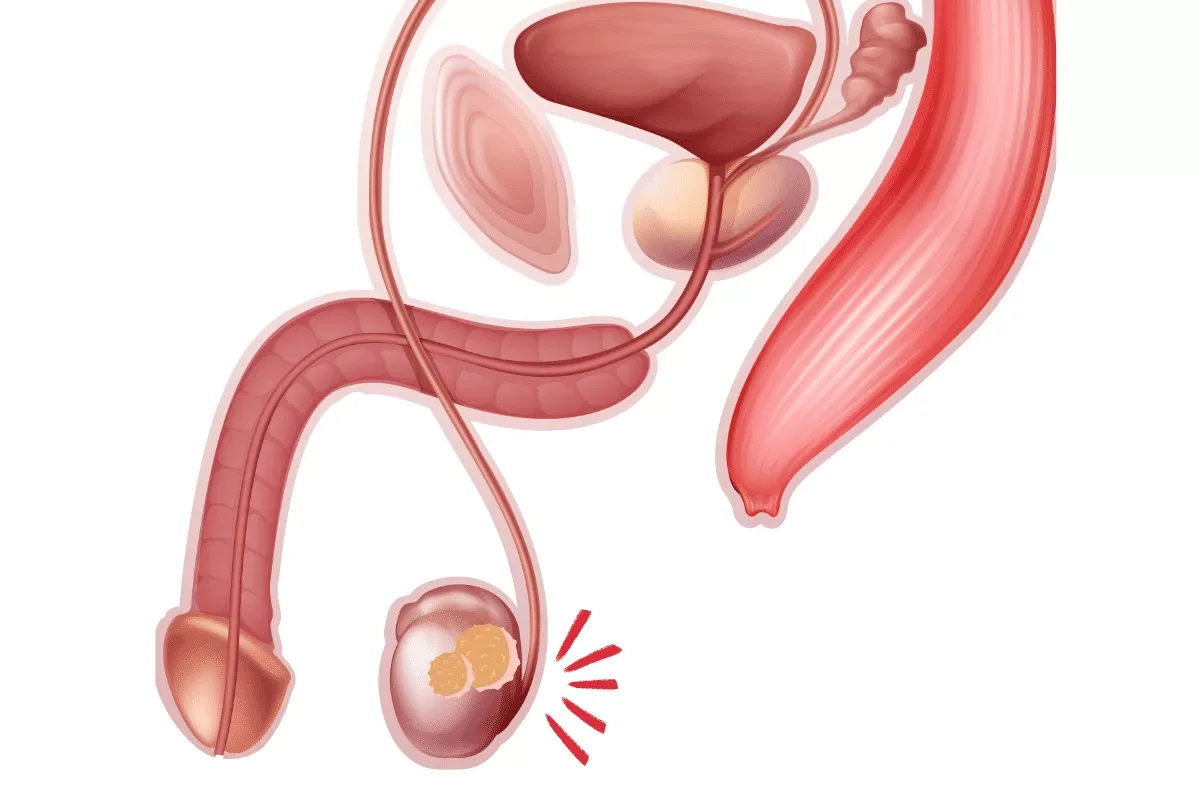
Spermatocelectomy is a surgical procedure used to remove a spermatocele, a benign fluid-filled cyst that develops in the epididymis, usually near the upper part of the testicle. Surgery is generally considered when the cyst causes persistent pain, discomfort, pressure, significant enlargement or bothersome scrotal asymmetry.
 ✓ Clinician-reviewed information
- Spermatocelectomy removes a symptomatic spermatocele while attempting to preserve the surrounding epididymis and testicle.
- Most spermatoceles do not require surgery unless they cause persistent pain, pressure, enlargement or significant discomfort.
- Microsurgical techniques may help reduce injury to the epididymis and testicular blood supply.
- The procedure is usually performed as day surgery, with return to light work commonly within about one week.
- Men who still want biological children should discuss fertility before surgery because epididymal injury or scarring can affect sperm transport.
About spermatocelectomy
Spermatocelectomy is surgery to remove a spermatocele from the epididymis.
A spermatocele is a benign cyst that contains fluid and may contain sperm.
It usually develops near the head of the epididymis, which lies behind and above the testicle.
Many spermatoceles are small and painless and require no treatment.
Surgery is generally considered when the cyst becomes large, painful or bothersome.
What symptoms can a spermatocele cause?
A spermatocele may cause:
Scrotal heaviness
Dull aching
Pressure
Discomfort during exercise
Discomfort while sitting
Scrotal asymmetry
Palpable lump above or behind the testicle
Cosmetic concern
Interference with daily activity
Severe pain is less typical and should prompt assessment for other causes of scrotal pain.
Does every spermatocele need surgery?
No.
Most small asymptomatic spermatoceles are observed rather than treated.
Surgery is generally reserved for men with:
Persistent discomfort
Significant enlargement
Pressure symptoms
Recurrent irritation
Functional bother
Strong patient preference after counselling
The decision should be based on symptoms rather than cyst size alone.
How is spermatocelectomy performed?
A small scrotal incision is made.
The surgeon identifies the testicle, epididymis and spermatocele.
The cyst is carefully separated from the surrounding epididymal tissue.
The connection or stalk between the spermatocele and epididymis is divided and the cyst is removed.
Bleeding is controlled and the testicle is returned to the scrotum.
The incision is then closed.
What is microsurgical spermatocelectomy?
Microsurgical spermatocelectomy uses magnification to identify the epididymal tubules and nearby blood vessels more clearly.
The aim is to:
Preserve epididymal continuity
Avoid unnecessary epididymal injury
Protect the testicular blood supply
Reduce postoperative scarring
This approach is particularly relevant in men who still want biological children.
Why does fertility matter before spermatocelectomy?
The epididymis transports sperm from the testicle into the vas deferens.
If epididymal tubules are damaged during surgery, sperm transport can become impaired.
This risk is especially important if:
Surgery is bilateral
The opposite side is abnormal
The patient already has reduced fertility
Previous epididymal surgery has been performed
Men who want future fertility should discuss semen analysis and fertility planning before surgery.
Can a spermatocele cause infertility?
A spermatocele itself does not usually cause infertility.
Very large or complex epididymal cysts can theoretically affect local anatomy, but most spermatoceles are not a direct cause of infertility.
The more important fertility issue is avoiding unnecessary epididymal injury during surgery.
Spermatocelectomy vs aspiration
Needle aspiration can temporarily remove fluid from a spermatocele, but the cyst lining remains.
As a result, the fluid frequently returns.
Aspiration can also cause:
Infection
Bleeding
Inflammation
Epididymal scarring
For a persistently symptomatic spermatocele in a healthy surgical candidate, definitive excision is generally preferred over repeated aspiration.
What about aspiration with sclerotherapy?
Sclerotherapy involves aspirating the cyst and injecting a chemical intended to make the cyst walls scar together.
This may be considered in selected patients who are poor surgical candidates.
However, epididymal scarring and recurrence are concerns, making it less attractive in men who want future fertility.
Spermatocelectomy vs hydrocelectomy
These procedures treat different conditions.
Spermatocelectomy removes a cyst arising from the epididymis.
Hydrocelectomy treats fluid collected around the testicle within the tunica vaginalis.
The two can occasionally coexist, but they are separate diagnoses and procedures.
Can multiple spermatoceles be removed?
Yes.
Some patients have more than one epididymal cyst.
The surgeon may remove multiple symptomatic cysts while attempting to preserve as much normal epididymal tissue as possible.
Can a spermatocele come back after surgery?
Recurrence is possible, although uncommon after complete excision.
A new cyst can also develop in another part of the epididymis.
Will the testicle remain normal after surgery?
The goal is to preserve the testicle and surrounding structures.
Temporary swelling and firmness are common after surgery.
Long-term testicular injury is uncommon when the procedure is uncomplicated.
Why surgeon experience matters
The spermatocele can be closely attached to delicate epididymal tubules.
Careful dissection matters because unnecessary damage can increase the risk of:
Epididymal obstruction
Chronic pain
Recurrence
Fertility problems
For younger men or patients concerned about fertility, microsurgical experience is particularly valuable.
Who it is for
- •You have a confirmed spermatocele causing persistent discomfort or heaviness.
- •The cyst has become large enough to interfere with daily activity.
- •You have repeated scrotal pressure or aching attributable to the spermatocele.
- •The cyst causes significant scrotal asymmetry or bothersome enlargement.
- •Observation is no longer acceptable to you after appropriate counselling.
- •Ultrasound confirms a benign epididymal cyst consistent with spermatocele.
- •You understand that surgery is generally performed for symptoms rather than to improve fertility.
- •You understand the small risk of epididymal injury or recurrence.
- •You are medically fit for elective surgery and anesthesia.
- •The spermatocele is small and asymptomatic.
- •Your scrotal pain has not been clearly attributed to the spermatocele.
- •Imaging suggests a testicular mass or another diagnosis requiring different management.
- •You have an untreated scrotal, urinary or systemic infection.
- •You are medically unfit for elective surgery.
- •Your main goal is to improve fertility without evidence that the spermatocele is clinically relevant.
- •You expect surgery to guarantee improvement in chronic scrotal pain from another cause.
- •You are unwilling to accept the small risk of epididymal scarring or fertility impact.
Preparing for surgery
What recovery looks like
Risks and complications
Common questions
What is spermatocelectomy?
What is a spermatocele?
Does every spermatocele need surgery?
When is surgery recommended?
Can a spermatocele become cancer?
How is a spermatocele diagnosed?
Can a spermatocele cause infertility?
Can spermatocelectomy affect fertility?
Should I freeze sperm before spermatocelectomy?
What is microsurgical spermatocelectomy?
Is microsurgical spermatocelectomy better?
What is the success rate?
Can the spermatocele come back?
Can aspiration treat a spermatocele?
What is sclerotherapy?
Is spermatocelectomy painful?
How long does surgery take?
Do I need to stay in hospital?
How long should I stay in Turkey?
When can I return to work?
When can I exercise?
When can I have sex?
Will the testicle look normal afterward?
What if my pain continues after surgery?
Which doctor performs spermatocelectomy?
Patient reviews
Been treated? Your honest review of Spermatocelectomy helps the next patient.
No one has reviewed this yet. If you have been treated, your experience would help the next person.
Write the first reviewSources
- Clinical series evaluating microsurgical spermatocelectomy with attention to recurrence, testicular atrophy and postoperative semen parameters. https://pubmed.ncbi.nlm.nih.gov/21074792/
- Patient-focused clinical reference covering observation, spermatocelectomy, aspiration and fertility considerations. https://www.mayoclinic.org/diseases-conditions/spermatocele/diagnosis-treatment/drc-20377833
- Clinical overview covering symptoms, diagnosis, observation and surgical treatment. https://my.clevelandclinic.org/health/diseases/17492-spermatocele