
Orchiectomy for Adult Undescended Testicle
Orchiectomy for an adult undescended testicle is surgery to remove a testis that remained outside the scrotum after puberty when preserving it is unlikely to provide meaningful reproductive or hormonal benefit. It is most often considered for a unilateral, atrophic or abnormal undescended testicle when the opposite testicle is healthy, particularly because long-standing cryptorchidism is associated with an increased risk of testicular germ-cell cancer.
 ✓ Clinician-reviewed information
- Orchiectomy removes a post-pubertal undescended testicle when preserving it is unlikely to provide sufficient benefit.
- It is particularly relevant for unilateral cryptorchidism when the affected testicle is atrophic and the opposite testicle is healthy.
- Long-standing cryptorchidism is associated with an increased risk of testicular germ-cell cancer.
- Removing one poorly functioning testicle usually does not cause testosterone deficiency or infertility when the opposite testicle is healthy.
- Orchidopexy may be preferable when preservation matters because of bilateral disease, a solitary testicle, impaired contralateral function or specific fertility and endocrine considerations.
About orchiectomy for adult undescended testicle
Orchiectomy is surgical removal of a testicle.
When cryptorchidism persists beyond puberty, the affected testicle may have undergone substantial structural and functional deterioration.
Adult management therefore differs from childhood cryptorchidism.
Rather than automatically moving the testicle into the scrotum with orchidopexy, the specialist must determine whether preserving it offers meaningful:
Fertility benefit
Hormonal benefit
Anatomical benefit
If those benefits are limited and the opposite testicle is healthy, removal may provide the more appropriate risk-benefit balance.
Why might an undescended testicle be removed?
A testicle that remains outside the scrotum for many years is exposed to a higher temperature than a normally descended testicle.
Long-term consequences may include:
Germ-cell loss
Impaired sperm production
Testicular atrophy
Fibrosis
Abnormal histology
Increased testicular cancer risk
By adulthood, some undescended testes are very small and provide little meaningful reproductive function.
In selected unilateral cases, orchiectomy may therefore be preferable to preserving a poorly functioning testicle.
When is orchiectomy preferred over orchidopexy?
The decision is individualized.
Orchiectomy becomes particularly relevant when:
Cryptorchidism is unilateral
The opposite testicle is healthy
The undescended testicle is severely atrophic
The testicle appears abnormal
Meaningful spermatogenic function is unlikely
Preservation provides little endocrine benefit
Malignancy is suspected
Orchidopexy may instead be considered when preserving testicular tissue is clinically important.
What do European guidelines recommend?
Current European guidance distinguishes post-pubertal patients according to testicular and reproductive function.
In adult men with a unilateral undescended testicle and normal contralateral testicular function, orchiectomy may be offered.
Orchidopexy can remain appropriate in selected patients with bilateral disease, impaired spermatogenesis, hypogonadism or other reasons to preserve testicular tissue.
The decision should therefore not be based on age alone.
Why does cryptorchidism increase testicular cancer risk?
Testicular maldescent is associated with abnormal germ-cell development.
Men with a history of cryptorchidism have a higher risk of developing testicular germ-cell tumors than men whose testes descended normally.
Risk is influenced by factors including:
Testicular location
Unilateral versus bilateral disease
Age at correction
Underlying testicular abnormalities
Correction before puberty is associated with a lower malignancy risk than late correction.
Does orchidopexy eliminate cancer risk?
No.
Moving a post-pubertal testicle into the scrotum makes examination and surveillance easier but does not eliminate the increased malignancy risk associated with its history of cryptorchidism.
This is an important reason orchiectomy may be discussed when a unilateral adult cryptorchid testicle is severely atrophic and offers little functional benefit.
How is orchiectomy performed?
The approach depends on testicular location and whether malignancy is suspected.
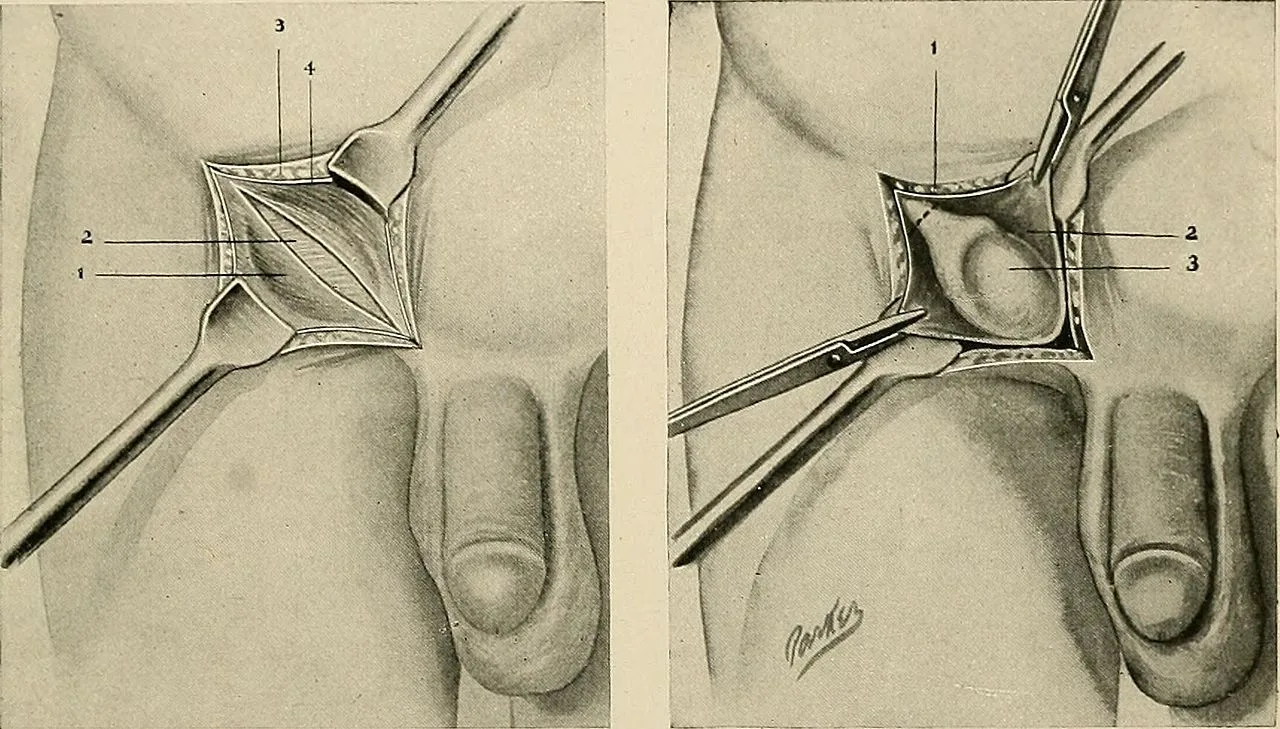
Inguinal testicle
A palpable testicle in the groin can usually be approached through an inguinal incision.
The surgeon identifies:
Testicle
Spermatic cord
Blood vessels
Vas deferens
The relevant structures are controlled and the testicle is removed.
Intra-abdominal testicle
A testicle located inside the abdomen may be removed laparoscopically.
Small abdominal incisions allow the surgeon to identify the testicle and spermatic structures using a camera.
The testicle is detached and removed in a controlled manner.
What if testicular cancer is suspected?
The surgical strategy changes if a suspicious mass is present.
A potentially malignant testicular tumor should be managed according to testicular-cancer principles rather than treated as a routine benign orchiectomy.
This may require:
Tumor markers
Ultrasound
Cross-sectional imaging
Radical inguinal orchiectomy
Histopathology
Oncological staging
Patients with suspected malignancy should be managed through an appropriate urologic oncology pathway.
What happens to the removed testicle?
The specimen is generally sent for histopathological examination.
The pathologist examines the tissue for abnormalities including:
Atrophy
Fibrosis
Germ-cell abnormalities
Germ cell neoplasia in situ
Testicular tumor
Histopathology is particularly important in long-standing adult cryptorchidism.
Will removing one testicle lower testosterone?
Usually not if the opposite testicle is healthy.
A normal contralateral testicle can generally produce sufficient testosterone to maintain:
Libido
Erections
Muscle mass
Bone health
Male secondary sexual characteristics
Hormonal testing can be performed before surgery when there is concern about existing testicular dysfunction.
Will removing one testicle cause infertility?
Not necessarily.
A healthy opposite testicle can often produce enough sperm for natural fertility.
In fact, a severely atrophic undescended testicle may already contribute very little to sperm production.
However, fertility should be assessed before surgery when:
Semen parameters are abnormal
The opposite testicle is small or abnormal
Previous testicular surgery occurred
The patient has known infertility
Future biological children are important
Should I have a semen analysis before surgery?
It can be valuable for men who want future fertility.
A semen analysis establishes baseline:
Sperm concentration
Motility
Semen volume
If significant abnormalities exist, additional fertility evaluation may be appropriate before removing testicular tissue.
Should sperm be frozen before orchiectomy?
Routine sperm freezing is not necessary for every unilateral orchiectomy.
Sperm cryopreservation may be considered when:
Semen quality is already reduced
The opposite testicle is abnormal
Bilateral testicular disease exists
Future fertility is a major concern
Additional gonadotoxic treatment may become necessary
What if both testicles are undescended?
Bilateral adult cryptorchidism requires a very different discussion.
Removing both testes causes permanent loss of natural testosterone production and eliminates any remaining sperm production.
Bilateral orchiectomy should therefore not be treated like routine unilateral removal.
Testis-preserving approaches, fertility evaluation and endocrine assessment become particularly important.
What if I only have one testicle?
If the undescended testicle is the patient's only testicle, removal has major endocrine and reproductive consequences.
Preservation should be considered whenever oncologically and technically safe.
If removal becomes necessary, the patient should receive counseling regarding:
Testosterone replacement
Fertility preservation
Sperm retrieval when applicable
Testicular prosthesis
What is a testicular prosthesis?
A testicular prosthesis is an implant placed inside the scrotum to reproduce the appearance and approximate feel of a testicle.
It does not:
Produce testosterone
Produce sperm
Restore fertility
Its purpose is cosmetic.
Placement may occur during the same operation or at a later stage.
Is a testicular prosthesis necessary?
No.
Some men prefer a prosthesis for symmetry, while others are comfortable without one.
The decision is personal and should be discussed before surgery.
Can orchiectomy improve pain?
If an abnormal or atrophic undescended testicle is clearly responsible for pain, removal may relieve the source.
However, orchiectomy should not be promised as a universal cure for chronic groin or scrotal pain because pain may arise from nerves, hernia, pelvic structures or other causes.
Why surgeon experience matters
Adult cryptorchidism combines reproductive, endocrine and oncological considerations.
The treating specialist should be able to determine whether the best option is:
Observation
Orchidopexy
Orchiectomy
Fertility preservation
Oncological investigation
For an international patient, this decision should ideally be made before travel whenever sufficient imaging and medical records are available.
Who it is for
- •You have a unilateral post-pubertal undescended testicle.
- •The undescended testicle is significantly atrophic.
- •The opposite testicle is healthy and functioning normally.
- •The affected testicle is unlikely to provide meaningful reproductive benefit.
- •The testicle appears abnormal and removal has been recommended.
- •Orchidopexy would provide little expected functional benefit.
- •You understand the reproductive and hormonal implications of removing the testicle.
- •Fertility has been assessed when clinically appropriate.
- •You understand that the removed testicle will normally undergo histopathological examination.
- •You are medically fit for surgery and anesthesia.
- •Both testes are undescended and preservation has not been adequately considered.
- •The undescended testicle is your only functioning testicle and the consequences of removal have not been fully evaluated.
- •The opposite testicle has impaired function and preservation of the affected testicle may be clinically valuable.
- •Fertility preservation has not been addressed despite significant existing infertility.
- •The testicle can reasonably be preserved and orchidopexy offers meaningful endocrine or reproductive benefit.
- •You have an untreated active infection.
- •You are medically unfit for elective surgery.
- •You expect orchiectomy to improve testosterone or fertility.
- •A suspicious testicular tumor requires a dedicated oncological pathway rather than routine elective management.
Preparing for surgery
What recovery looks like
Risks and complications
Common questions
What is orchiectomy?
Why would an adult undescended testicle be removed?
Is orchiectomy always necessary for adult cryptorchidism?
Which is better, orchidopexy or orchiectomy?
Can I live normally with one testicle?
Will removing one testicle lower testosterone?
Will I still have erections?
Can I still have children?
Should I have a semen analysis first?
Should I freeze sperm?
Does an undescended testicle increase cancer risk?
Does orchidopexy remove that cancer risk?
What happens to the removed testicle?
What happens if cancer is found?
Can I get a testicular implant?
Does a testicular prosthesis make testosterone?
Can the prosthesis be inserted during the same surgery?
How is an abdominal undescended testicle removed?
How long does surgery take?
Do I need to stay in hospital?
How long should I stay in Turkey?
When can I return to work?
When can I exercise?
When can I have sex?
Will my sex drive change?
What if both my testicles are undescended?
Which doctor should perform this surgery?
Patient reviews
Been treated? Your honest review of Orchiectomy for Adult Undescended Testicle helps the next patient.
No one has reviewed this yet. If you have been treated, your experience would help the next person.
Write the first reviewSources
- Provides contemporary guidance on management of post-pubertal cryptorchidism, including circumstances in which orchiectomy or orchidopexy may be offered. https://uroweb.org/guidelines/sexual-and-reproductive-health/chapter/male-infertility
- Large Swedish cohort demonstrating the relationship between age at cryptorchidism surgery and subsequent testicular cancer risk. https://pubmed.ncbi.nlm.nih.gov/17476009/
- Review addressing orchiectomy, orchidopexy and observation in post-pubertal patients according to age, fertility, endocrine function and malignancy risk. https://pmc.ncbi.nlm.nih.gov/articles/PMC4709431/
- Systematic review discussing orchiectomy versus orchidopexy and the need for individualized adult management. https://pmc.ncbi.nlm.nih.gov/articles/PMC11470230/