
TESA — Testicular Sperm Aspiration
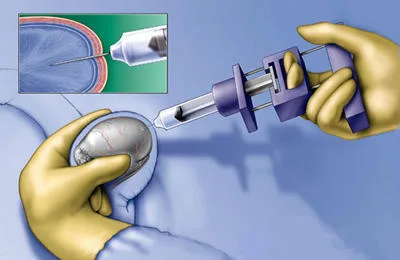
Testicular sperm aspiration (TESA) is a minimally invasive sperm retrieval procedure in which a needle is inserted through the scrotal skin directly into the testicle to aspirate seminiferous tissue and sperm for use with intracytoplasmic sperm injection (ICSI). It is most commonly used in men with obstructive azoospermia when sperm production is preserved but sperm cannot reach the ejaculate, and it may also be used as a backup when epididymal sperm retrieval is unsuccessful.
 ✓ Clinician-reviewed information
- TESA retrieves sperm directly from the testicle through a needle inserted through the scrotal skin.
- It is primarily used for obstructive azoospermia when sperm production is preserved but sperm cannot reach the ejaculate.
- In appropriately selected obstructive azoospermia, published series report sperm retrieval rates close to 99%.
- TESA is less invasive than open testicular sperm extraction because it generally does not require a surgical testicular incision.
- Retrieved sperm are typically used with ICSI, and successful sperm retrieval does not guarantee fertilization, pregnancy or live birth.
About tesa — testicular sperm aspiration
TESA stands for Testicular Sperm Aspiration.
It is a percutaneous sperm retrieval procedure in which sperm are obtained directly from the testicle.
A fine needle is inserted through the scrotal skin into the testicular tissue, and gentle suction is used to aspirate small amounts of seminiferous tissue.
The laboratory then examines this tissue for viable sperm.
When sperm are identified, they can be used fresh for ICSI or cryopreserved for future fertility treatment.
Why retrieve sperm directly from the testicle?
Sperm are produced inside microscopic structures called seminiferous tubules within the testes.
In obstructive azoospermia, sperm production may remain normal, but sperm cannot travel through the epididymis, vas deferens or ejaculatory pathway into the semen.
TESA bypasses the obstruction completely by obtaining sperm directly from the source.
This makes it useful in men whose testes produce sperm normally but whose reproductive tract is blocked.
How is TESA performed?
The scrotal skin is cleaned and anesthetized.
The surgeon stabilizes the testicle and inserts a fine aspiration needle through the skin into the testicular tissue.
Gentle negative pressure is applied while the needle is moved through a small area of the testis.
Small fragments of seminiferous tissue are aspirated into the syringe.
These samples are immediately passed to the embryology laboratory.
The embryologist examines the tissue to determine whether viable sperm are present and whether enough sperm have been obtained for ICSI.
Several needle passes may be performed if necessary.
When sufficient sperm are retrieved, the procedure is completed.
Who usually needs TESA?
TESA is mainly used in men with obstructive azoospermia.
Common situations include:
After vasectomy
A vasectomy blocks the vas deferens and prevents sperm from reaching the ejaculate.
If a man later wants biological children, sperm can sometimes be retrieved directly from the testicle and used with ICSI.
Congenital absence of the vas deferens
Men with congenital bilateral absence of the vas deferens may have normal testicular sperm production but no pathway for sperm to reach the semen.
TESA can provide sperm for assisted reproduction.
Epididymal or vasal obstruction
Previous infection, surgery, injury or congenital abnormalities can block sperm transport.
TESA bypasses these structures.
Failed epididymal retrieval
TESA is commonly used as a backup when PESA does not retrieve enough usable sperm.
This is sometimes called rescue TESA.
TESA vs PESA
These procedures differ primarily in where sperm are obtained.
PESA retrieves sperm from the epididymis.
TESA retrieves sperm directly from the testicle.
In men with obstructive azoospermia, PESA may be attempted first because mature sperm are often readily available in the epididymis.
If PESA fails or provides inadequate sperm, TESA can be performed during the same treatment session.
TESA vs MESA
MESA retrieves sperm microsurgically from the epididymis through a small incision and operating microscope.
TESA is less invasive and does not require microsurgical exposure of the epididymis.
MESA may produce larger quantities of sperm for extensive cryopreservation, while TESA offers a simpler percutaneous testicular approach.
Neither method is universally superior.
The best procedure depends on:
Location of obstruction
Previous surgery
Need for sperm cryopreservation
Availability of microsurgical expertise
Couple's IVF plan
TESA vs TESE
Both procedures retrieve sperm directly from the testicle.
TESA
Uses a needle aspiration technique.
Advantages include:
No open testicular incision in most cases
Shorter procedure
Faster recovery
Less invasive approach
TESE
Uses a small surgical incision to obtain testicular tissue.
TESE allows direct removal of larger pieces of tissue and may be useful when aspiration does not retrieve adequate sperm.
In obstructive azoospermia, TESA often provides sufficient sperm without requiring open extraction.
TESA vs Micro-TESE
These procedures should remain clearly separated on your platform.
TESA is particularly useful when sperm production is expected to be normal, especially in obstructive azoospermia.
Micro-TESE is a microsurgical procedure designed primarily for non-obstructive azoospermia, where sperm production is severely impaired and may exist only in small focal areas of the testis.
The surgeon uses an operating microscope during Micro-TESE to search for enlarged seminiferous tubules that may contain sperm.
For a patient with classic NOA, Micro-TESE is generally a more important specialist procedure than blind aspiration.
How successful is TESA?
Success depends strongly on why the patient is azoospermic.
In obstructive azoospermia, where sperm production is preserved, retrieval rates are extremely high.
A large study of 327 TESA/ICSI cycles reported sperm retrieval in approximately 99.4% of men with obstructive azoospermia.
This should not be generalized to non-obstructive azoospermia.
When sperm production is severely impaired, aspiration can fail even if isolated areas of spermatogenesis remain elsewhere in the testis.
Why is ICSI used after TESA?
Testicular sperm are generally used with intracytoplasmic sperm injection (ICSI).
During ICSI, an embryologist injects a single sperm directly into an egg.
This is important because testicular sperm have not completed the same maturation pathway as ejaculated sperm and may have limited natural motility.
ICSI bypasses the need for sperm to travel through the female reproductive tract and independently penetrate the egg.
Can TESA sperm be frozen?
Yes.
When adequate viable sperm are retrieved, the laboratory may cryopreserve them for later ICSI treatment.
Cryopreservation can reduce the need for another surgical sperm retrieval procedure.
However, the amount of sperm obtained through TESA varies.
Some patients produce enough sperm for several cycles, while others may have only enough material for a single treatment.
Fresh or frozen TESA sperm?
Both fresh and cryopreserved testicular sperm can be used successfully with ICSI.
The choice depends on:
Quantity retrieved
Laboratory quality
Timing of the partner's egg retrieval
Previous treatment
Whether backup sperm storage is desired
For international patients, retrieving and successfully freezing sperm before the female partner's IVF cycle can sometimes simplify travel logistics.
Does TESA restore natural fertility?
No.
TESA retrieves sperm for assisted reproduction but does not remove the underlying blockage.
A patient with obstructive azoospermia generally remains azoospermic after TESA.
Men who want sperm to return naturally to the ejaculate may instead be candidates for reconstructive procedures such as:
Vasovasostomy
Vasoepididymostomy
depending on the location and cause of obstruction.
Why accurate diagnosis matters before TESA
Before choosing TESA, the medical team should determine whether azoospermia is likely to be:
Obstructive
Non-obstructive
This distinction changes the expected sperm retrieval rate dramatically.
Evaluation may include:
Repeat semen analysis
Medical history
Physical examination
Testicular volume
FSH
LH
Testosterone
Genetic testing when indicated
Ultrasound in selected patients
A man should not be sent for routine TESA simply because his semen analysis shows no sperm.
Who it is for
- •You have confirmed obstructive azoospermia with preserved sperm production.
- •You have infertility after vasectomy and have chosen sperm retrieval with IVF/ICSI.
- •You have congenital absence of the vas deferens and require sperm retrieval for assisted reproduction.
- •You have vasal or epididymal obstruction that prevents sperm from reaching the ejaculate.
- •PESA has failed or has not produced sufficient sperm for ICSI.
- •Your fertility team expects viable sperm to be readily present in the testicular tissue.
- •You prefer a minimally invasive testicular retrieval procedure when clinically appropriate.
- •Your partner is undergoing IVF/ICSI and testicular sperm retrieval is part of the reproductive plan.
- •You understand that TESA retrieves sperm but does not repair the obstruction.
- •You understand that ICSI is generally required to use testicular sperm.
- •You have confirmed severe non-obstructive azoospermia for which Micro-TESE is considered the more appropriate retrieval strategy.
- •Your azoospermia has not yet been evaluated to determine whether it is obstructive or non-obstructive.
- •You have an untreated scrotal infection.
- •You have an untreated urinary or systemic infection.
- •You have an uncontrolled bleeding disorder or anticoagulation that cannot be safely managed.
- •You are medically unsuitable for the planned anesthesia or procedure.
- •You are primarily seeking restoration of natural sperm passage and reconstructive surgery is more appropriate.
- •Your reproductive treatment plan does not include ICSI or another appropriate use for retrieved sperm.
- •You expect the procedure to restore sperm to the semen.
- •You expect sperm retrieval to guarantee fertilization, pregnancy or live birth.
Preparing for surgery
What recovery looks like
Risks and complications
Common questions
What is TESA?
Who needs TESA?
Can TESA be used after vasectomy?
Can TESA be used for CBAVD?
How successful is TESA?
Is the success rate the same for non-obstructive azoospermia?
Can TESA be used for non-obstructive azoospermia?
What is the difference between TESA and PESA?
What happens if PESA fails?
What is the difference between TESA and TESE?
Is TESA less invasive than TESE?
What is the difference between TESA and Micro-TESE?
Does TESA hurt?
Does TESA require an incision?
How long does TESA take?
Do I need to stay in hospital?
Can TESA sperm be frozen?
Can frozen TESA sperm be used for ICSI?
Is ICSI required after TESA?
Can TESA sperm be used for IUI?
Does TESA cure azoospermia?
Will sperm return to my semen after TESA?
Can TESA be repeated?
Does TESA affect testosterone?
Can TESA damage the testicle?
TESA or vasectomy reversal — which is better?
How long should I stay in Turkey?
When can I return to work?
When can I exercise?
When can I have sex?
Which doctor performs TESA?
Patient reviews
Been treated? Your honest review of TESA — Testicular Sperm Aspiration helps the next patient.
No one has reviewed this yet. If you have been treated, your experience would help the next person.
Write the first reviewSources
- Large clinical series reporting approximately 99.4% sperm retrieval efficiency in men with obstructive azoospermia undergoing TESA. https://pubmed.ncbi.nlm.nih.gov/17184103/
- Study reporting sperm recovery with PESA or TESA in all men with obstructive azoospermia and examining testicular retrieval in non-obstructive cases. https://pubmed.ncbi.nlm.nih.gov/10374107/
- Recent series evaluating PESA with rescue TESA, reporting successful retrieval in all 157 retrieval attempts in the study cohort. https://pubmed.ncbi.nlm.nih.gov/39723884/
- Study using PESA as the first retrieval method and TESA or TESE as rescue procedures when epididymal sperm were insufficient. https://pubmed.ncbi.nlm.nih.gov/11853299/
- Study comparing reproductive outcomes with TESA sperm from obstructive azoospermia, Micro-TESE sperm from non-obstructive azoospermia and ejaculated sperm. https://pubmed.ncbi.nlm.nih.gov/38000348/
- Study demonstrating that TESA has substantially lower and less predictable retrieval success in non-obstructive azoospermia and that subsequent TESE can identify additional sperm. https://pubmed.ncbi.nlm.nih.gov/18850334/
- EAU Guidelines on Sexual and Reproductive Health — Male Infertility https://uroweb.org/guidelines/sexual-and-reproductive-health/chapter/male-infertility