
Adult Buried Penis Reconstruction
Adult buried penis reconstruction is a reconstructive urological procedure that exposes and restores a normally developed penis that has become hidden beneath suprapubic fat, excess skin, scar tissue, lymphedema or diseased genital tissue. Surgery is individualized and may combine release of scar tissue, removal of excess suprapubic tissue, penile fixation and replacement of unhealthy penile skin with a skin graft to improve urination, hygiene, sexual function and quality of life.
 ✓ Clinician-reviewed information
- Adult buried penis reconstruction restores exposure of a normally developed penis that has become concealed by fat, skin, scar tissue, lymphedema or chronic inflammation.
- Surgery is individualized and may involve escutcheonectomy, removal of diseased tissue, penile fixation and skin grafting rather than one standardized operation.
- The procedure aims to improve urination, genital hygiene, sexual access and quality of life rather than biologically lengthening the penis.
- Published reconstructive series show substantial improvements in urinary and sexual function, with high patient-reported satisfaction despite meaningful wound-complication rates.
- Obesity, diabetes, smoking, lichen sclerosus and severe lymphedema can increase surgical complexity and should be optimized before reconstruction when possible.
About adult buried penis reconstruction
Adult buried penis reconstruction is surgery used to restore a penile shaft that has become partially or completely hidden beneath surrounding tissues.
The penis itself may be anatomically normal in length but difficult or impossible to expose because of:
Excess suprapubic fat
An overhanging abdominal pannus
Scar tissue
Diseased penile skin
Lichen sclerosus
Genital lymphedema
Previous surgery
Previous trauma
Complications of penile enhancement procedures
The operation removes or repositions the tissues responsible for concealment and reconstructs the penile skin and supporting structures when necessary.
What problems can a buried penis cause?
Adult acquired buried penis is more than a cosmetic concern.
Severe cases can cause substantial functional problems.
Patients may experience:
Difficulty urinating while standing
Urinary spraying
Urine trapping
Chronic moisture
Recurrent skin infections
Difficulty cleaning the penis
Chronic skin inflammation
Pain
Difficulty exposing the glans
Difficulty with sexual penetration
Reduced sexual confidence
Some men cannot visually identify or access the urinary opening because the penis is deeply concealed.
Does buried penis surgery make the penis longer?
The procedure does not primarily lengthen the erectile bodies.
Instead, it exposes penile shaft that was previously hidden beneath surrounding tissue.
As a result, the visible and usable penis may appear substantially longer after successful reconstruction.
This distinction is important.
Buried penis reconstruction should not be marketed as cosmetic penile-lengthening surgery.
Why does obesity cause buried penis?
Obesity can produce a large suprapubic fat pad called the escutcheon.
As this tissue enlarges and descends, it can surround the penile base and conceal increasing portions of the shaft.
An abdominal pannus may further cover the genital region.
The concealed penis then creates a warm and moist environment.
Urine can become trapped, producing:
Maceration
Infection
Inflammation
Skin damage
Scar formation
Scar tissue can progressively tighten around the penis and worsen concealment.
Can losing weight fix buried penis?
Weight loss can help some patients, particularly when suprapubic fat is the dominant cause.
However, significant weight loss does not always completely correct established buried penis.
Problems that may remain include:
Excess skin
Descended escutcheon
Scar tissue
Lymphedema
Diseased penile skin
Abnormal penile fixation
For this reason, some men continue to require reconstructive surgery even after substantial weight loss.
What happens during buried penis reconstruction?
There is no single operation appropriate for every patient.
The surgeon evaluates which tissues are responsible for concealment and constructs an individualized surgical plan.
The operation may include several steps.
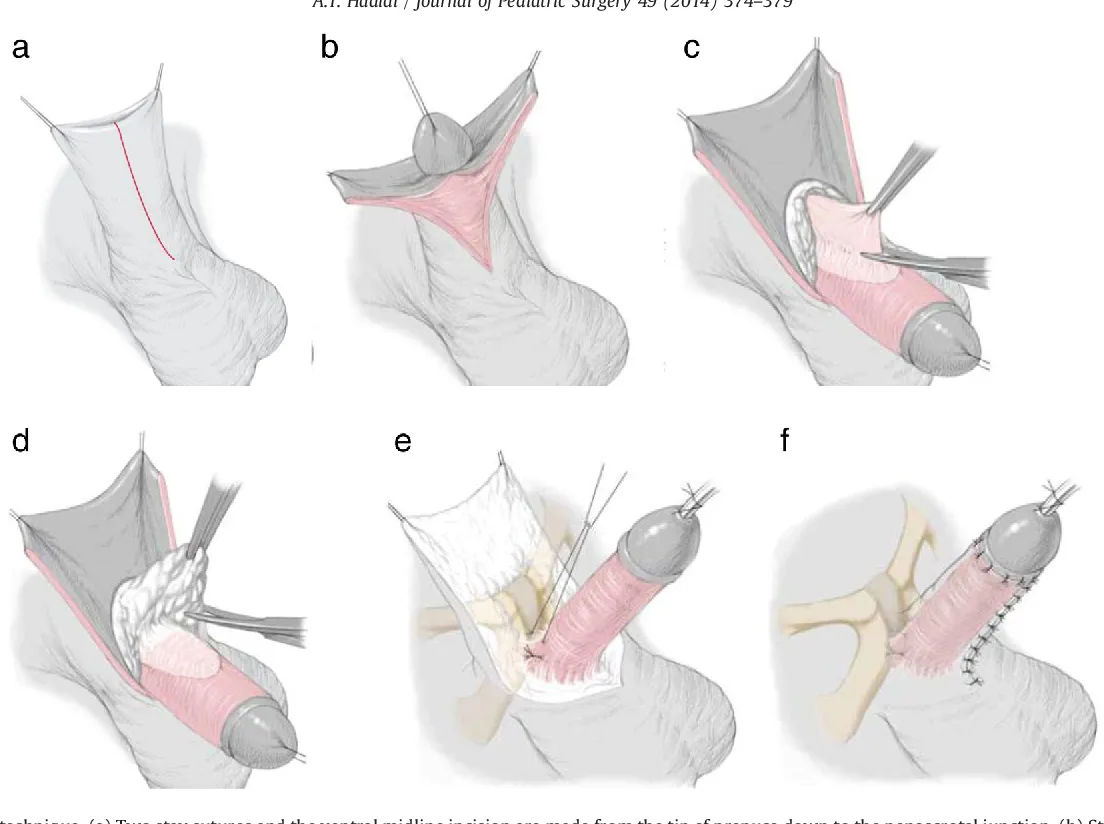
Release of the buried penis
The first goal is to free the penile shaft from surrounding scar tissue and abnormal attachments.
Dense scar tissue may need to be removed to fully expose the corporal bodies and healthy penile structures.
Removal of diseased penile skin
Chronically buried penile skin may become:
Scarred
Infected
Macerated
Lichen-sclerosus affected
Non-elastic
Structurally damaged
Severely diseased tissue may need to be excised rather than preserved.
Escutcheonectomy
An escutcheonectomy removes excess skin and fat from the suprapubic region immediately above the penis.
This can substantially improve penile exposure.
Escutcheonectomy should sit under your Techniques category rather than competing with buried penis reconstruction as another primary Procedure.
Panniculectomy
Some patients have a large abdominal pannus that hangs over the genital area.
A panniculectomy removes this excess abdominal skin and fat.
It may be performed as part of more extensive buried penis reconstruction.
Complex cases may involve collaboration between reconstructive urology and plastic surgery.
Suprapubic lipectomy
Localized fat removal can be performed when excessive suprapubic fat contributes significantly to concealment.
This may be combined with skin removal and fixation.
Penile fixation
Abnormal mobility of the penile base can contribute to recurrent burial.
The surgeon may therefore fix tissues around the penile base to deeper structures to recreate a stable penopubic junction.
This helps prevent surrounding tissues from sliding forward and re-burying the penis.
Penopubic angle reconstruction
A defined angle between the penile base and suprapubic region is important for normal penile exposure.
Reconstruction can restore this anatomical relationship and improve the stability of the surgical result.
When is skin grafting required?
Some patients do not have enough healthy penile skin after diseased tissue is removed.
In these cases, a skin graft may be required to cover the exposed penile shaft.
Split-thickness skin grafts are commonly used.
The graft is usually harvested from another area of the patient's body, such as the thigh.
The graft is then carefully wrapped and secured around the penis.
What is a split-thickness skin graft?
A split-thickness skin graft contains the epidermis and part of the dermis.
Because it is relatively thin, it can adapt well to the contour and expansion of the penis.
The donor site typically heals independently over time.
Split-Thickness Skin Grafting should sit under Techniques.
Buried penis and lichen sclerosus
Lichen sclerosus is particularly important in adult buried penis.
It can produce:
Chronic inflammation
Phimosis
Dense scarring
Meatal stenosis
Urethral stricture
Poor-quality penile skin
If lichen sclerosus is present, reconstruction must address both the concealed penis and the underlying skin disease.
Patients with urinary symptoms may require evaluation for urethral involvement.
Buried penis and genital lymphedema
Severe genital or scrotal lymphedema can surround and completely hide the penis.
These cases can require extensive removal of diseased tissue and reconstructive coverage.
They are often considerably more complex than obesity-related concealment alone.
Buried penis after penile injections or enhancement procedures
Foreign-material injections and complications from penile enlargement procedures can produce:
Chronic inflammation
Granulomas
Fibrosis
Skin damage
Large subcutaneous masses
If this tissue surrounds or traps the shaft, complex reconstruction may be required.
Treatment may involve removing the foreign material and damaged skin followed by reconstruction or grafting.
Buried penis after circumcision or genital surgery
Excessive removal of penile skin or severe postoperative scarring can trap the penis inward.
Reconstructive treatment may require:
Scar release
Skin replacement
Local flaps
Skin grafts
Penile fixation
These cases should be evaluated individually.
Does reconstruction improve urination?
One of the major goals is to restore direct access to the urinary meatus.
Successful reconstruction may allow patients who previously had to sit to urinate to direct the urinary stream more normally.
It may also reduce:
Urine trapping
Skin maceration
Persistent moisture
Genital infections
Does reconstruction improve sexual function?
Restoring penile exposure can make:
Erections more accessible
Penetration mechanically possible
Genital hygiene easier
Sexual activity more comfortable
However, buried penis reconstruction does not automatically treat underlying erectile dysfunction.
A patient with vascular, neurological or diabetic ED may still require separate erectile dysfunction treatment.
Why reconstructive experience matters
Adult buried penis surgery can involve several surgical disciplines.
The surgeon may need experience with:
Penile reconstruction
Skin grafting
Scar excision
Lymphedema surgery
Obesity-related genital reconstruction
Urethral disease
Complex wound management
Severe cases may require a combined urology and plastic-surgery team.
For international patients, the complexity of the operation makes surgeon and center selection particularly important.
Who it is for
- •You have adult acquired buried penis causing significant functional problems.
- •The penis is partially or completely hidden beneath suprapubic tissue, skin, scar tissue or lymphedema.
- •You have difficulty directing your urinary stream because the penis is concealed.
- •You experience recurrent urine trapping, chronic moisture, genital irritation or infections.
- •Genital hygiene is difficult because the penis cannot be adequately exposed.
- •Sexual penetration is difficult or impossible because of penile concealment.
- •Significant burial persists despite appropriate weight loss.
- •Scar tissue, lichen sclerosus or damaged penile skin contributes to concealment.
- •You have genital lymphedema that buries the penis.
- •You developed buried penis after circumcision, genital surgery or another penile procedure.
- •You understand that reconstruction restores exposure of existing penile length rather than guaranteeing penile enlargement.
- •You are medically fit for major reconstructive surgery and anesthesia.
- •Your concern is primarily normal penile-size variation without true penile concealment.
- •You have true micropenis without a buried or concealed penile shaft.
- •Your main goal is cosmetic penile lengthening rather than functional reconstruction.
- •You have an untreated active genital, urinary or systemic infection.
- •Severe medical conditions make major elective surgery unsafe.
- •Diabetes or another modifiable condition is poorly controlled and should first be optimized.
- •You continue to smoke heavily and the surgical team considers wound or graft risk unacceptable without smoking cessation.
- •You have unrealistic expectations about penile length or appearance.
- •The degree of concealment is mild and does not produce meaningful functional problems.
- •You are unwilling or unable to follow prolonged wound care, graft care or postoperative restrictions.
Preparing for surgery
What recovery looks like
Risks and complications
Common questions
What is adult buried penis reconstruction?
Is buried penis surgery the same as penis enlargement?
Will my penis look longer after surgery?
What causes adult buried penis?
Can weight loss cure buried penis?
Should I lose weight before surgery?
What is an escutcheonectomy?
What is the difference between escutcheonectomy and panniculectomy?
Do I need a skin graft?
Where does the skin graft come from?
Does skin grafting affect erections?
Can buried penis surgery improve urination?
Can surgery improve sexual intercourse?
Can lichen sclerosus cause buried penis?
Can penile fillers or injections cause buried penis?
Can buried penis return after surgery?
What is the success rate?
Are complications common?
How long does surgery take?
How long will I stay in hospital?
How long should I stay in Turkey?
When can I return to work?
When can I exercise?
When can I have sex?
Will I need plastic surgery as well as urology?
Which doctor should perform buried penis reconstruction?
Patient reviews
Been treated? Your honest review of Adult Buried Penis Reconstruction helps the next patient.
No one has reviewed this yet. If you have been treated, your experience would help the next person.
Write the first reviewSources
- Large reconstructive series examining complications, functional outcomes and long-term patient satisfaction. https://pubmed.ncbi.nlm.nih.gov/29649472/
- Comprehensive review of the causes, assessment and reconstructive management of adult acquired buried penis. https://pmc.ncbi.nlm.nih.gov/articles/PMC6127540/
- Study evaluating quality-of-life and sexual outcomes following buried penis reconstruction. https://pubmed.ncbi.nlm.nih.gov/?term=sexual+quality+life+buried+penis+reconstruction
- Review of contemporary reconstructive approaches including escutcheonectomy, skin grafting and management of obesity-associated buried penis. https://pubmed.ncbi.nlm.nih.gov/28801716/
- Guideline discussion distinguishing buried penis from true penile-length abnormalities. https://uroweb.org/guidelines/sexual-and-reproductive-health/chapter/penile-size-abnormalities-and-dysmorphophobia