
Globozoospermia
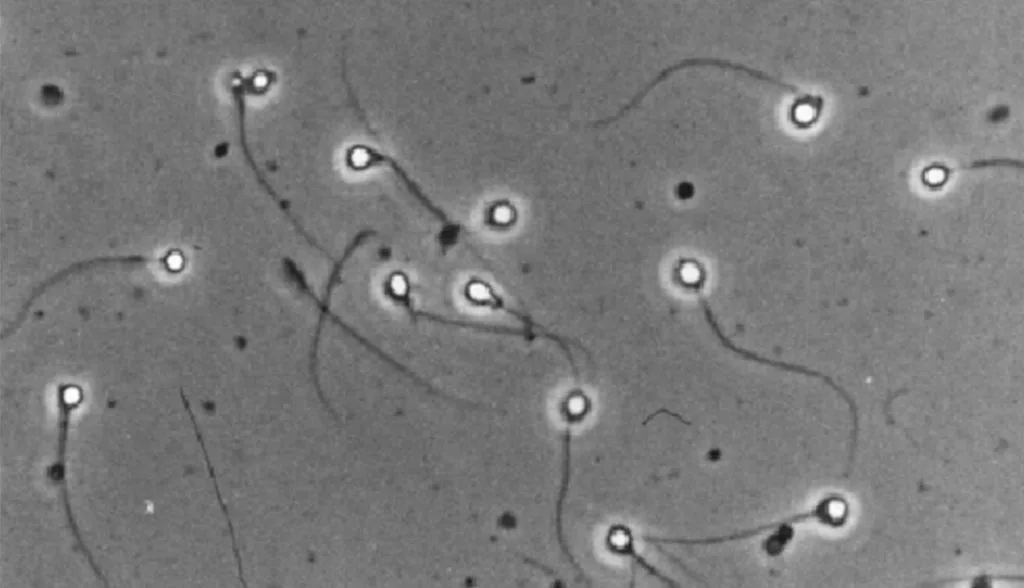
Globozoospermia is a rare, severe sperm morphology disorder in which sperm have abnormally round heads and lack a normal acrosome, the structure needed for normal interaction with and activation of the egg. It is an important genetic cause of male infertility and is commonly associated with fertilization failure, even when sperm count and motility are otherwise relatively preserved.
Also known as: Round-headed sperm syndrome, Round head sperm syndrome, Round-headed spermatozoa, Acrosomeless sperm syndrome, Acrosome-deficient sperm, Globozoospermia syndrome, Total globozoospermia, Complete globozoospermia, Partial globozoospermia, Round sperm heads
 ✓ Clinician-reviewed information
- Globozoospermia is a rare sperm morphology disorder characterized by round-headed sperm with an absent or severely abnormal acrosome.
- It accounts for less than approximately 0.1% of male infertility cases.
- Genetic abnormalities are common, particularly involving the DPY19L2 gene.
- The absence of the acrosome and abnormalities in sperm-mediated oocyte activation can cause severe fertilization failure.
- IVF with ICSI is usually required, and assisted oocyte activation may be considered in carefully selected cases, although evidence and safety considerations should be discussed with an experienced reproductive medicine team.
Overview
Globozoospermia is a rare and severe form of teratozoospermia, meaning that sperm have a characteristic structural abnormality.
The classic sperm cell normally has an oval-shaped head containing:
The paternal genetic material
A specialized structure called the acrosome
The acrosome forms a cap over the front portion of the sperm head and contains proteins involved in normal fertilization.
In globozoospermia, the sperm head becomes characteristically:
Round
Acrosome-deficient
Structurally abnormal
The WHO laboratory manual specifically describes globozoospermia as the round-head defect caused by failure of normal acrosome development.
What is the acrosome?
The acrosome is a specialized organelle that develops over the head of a mature sperm.
It contributes to the sperm's ability to interact with and penetrate the structures surrounding the egg.
Sperm affected by globozoospermia either:
Completely lack an acrosome
Have severe acrosomal hypoplasia or malformation
The abnormality therefore affects much more than appearance.
It can directly interfere with fertilization.
Why does globozoospermia cause infertility?
Several mechanisms may contribute.
Failure of normal egg penetration
Acrosome-deficient sperm cannot interact normally with the zona pellucida surrounding the oocyte.
This makes conventional fertilization extremely difficult.
Oocyte activation deficiency
Even when ICSI bypasses the need for the sperm to penetrate the egg naturally, fertilization may still fail.
One reason is that globozoospermic sperm may have reduced levels or abnormal localization of proteins involved in activating the oocyte after sperm injection.
An important example is phospholipase C zeta (PLCζ).
Oocyte activation failure is a major reason why conventional ICSI alone can produce poor fertilization in some globozoospermic patients.
Is globozoospermia genetic?
Very often.
Globozoospermia is considered a genetically heterogeneous disorder, meaning several different genes may cause a similar sperm phenotype.
The most important gene is:
DPY19L2
DPY19L2 abnormalities are among the most frequently identified genetic causes of complete globozoospermia.
Other genes reported in association with the condition include:
SPATA16
PICK1
GGN
SPACA1
ZPBP
CCDC62
CCNB3
and additional candidate genes continue to be investigated.
A systematic review therefore recommends considering genetic evaluation as part of the clinical assessment of affected men.
What does DPY19L2 do?
DPY19L2 plays an important role during sperm-head development.
During normal spermiogenesis, the developing acrosome must remain attached to the sperm nucleus.
Loss of normal DPY19L2 function interferes with this process, resulting in:
Acrosome loss
Failure of normal sperm-head elongation
Round-headed sperm
Large deletions or pathogenic variants affecting DPY19L2 have been identified in many men with complete globozoospermia.
Types of globozoospermia
Symptoms
Causes
Risk factors
How it is diagnosed
Diagnosis begins with a carefully performed semen analysis and detailed sperm morphology assessment.
Semen analysis
Standard semen analysis evaluates:
Sperm concentration
Total sperm count
Motility
Morphology
Vitality when appropriate
In globozoospermia, the characteristic finding is a high proportion of sperm with:
Round heads
Absent acrosomes
Abnormal sperm-head morphology
WHO guidance specifically emphasizes that distinctive monomorphic sperm abnormalities such as round-headed/acrosomeless sperm should be recognized and reported.
Morphology assessment
An experienced andrology laboratory examines stained sperm under high magnification.
The embryologist evaluates:
Head shape
Acrosome
Midpiece
Tail
Proportion of sperm showing the same abnormal phenotype
When virtually all sperm share the characteristic round-headed abnormality, complete globozoospermia is suspected.
Acrosome assessment
Specialized laboratory staining or microscopy can demonstrate absence or severe abnormality of the acrosome.
This may help distinguish true globozoospermia from other causes of round-headed or abnormal sperm morphology.
Genetic testing
Genetic evaluation is important, particularly in complete globozoospermia.
Testing may include:
DPY19L2 deletion analysis
DPY19L2 sequencing
Targeted genetic panels
Broader infertility gene panels in selected cases
Additional genes may be investigated when DPY19L2 testing is negative.
Genetic counselling
Genetic counselling can be valuable before assisted reproduction because some forms of globozoospermia are inherited.
The implications depend on:
Specific gene involved
Inheritance pattern
Partner genetics
Planned reproductive treatment
Sperm DNA and chromatin testing
Some studies have identified increased sperm DNA fragmentation or abnormal chromatin packaging in affected men.
These tests are not universally required for every patient but may be considered in specialist fertility centers when the result would influence management.
- A semen analysis reports round-headed sperm.
- The laboratory suspects globozoospermia.
- Nearly all sperm have abnormal round heads.
- You and your partner have unexplained infertility.
- Fertilization failed despite apparently adequate sperm numbers.
- A previous ICSI cycle resulted in total or near-total fertilization failure.
- You have been advised that sperm lack normal acrosomes.
- A DPY19L2 mutation or deletion has been identified.
- There is a family history of severe male infertility.
- You want genetic counselling before IVF/ICSI.
- Obtain expert semen morphology analysis when severe teratozoospermia is reported.
- Consider genetic testing in complete globozoospermia.
- Seek genetic counselling when a pathogenic variant is identified.
- Discuss assisted reproduction with a specialist experienced in severe male-factor infertility.
- Review previous fertilization outcomes before subsequent IVF/ICSI cycles.
- Consider fertility-center evaluation when conventional ICSI results in very low or absent fertilization.
Common questions
What is globozoospermia?
Why are the sperm round?
What is the acrosome?
Can a sperm fertilize an egg without an acrosome?
Is globozoospermia genetic?
What is DPY19L2?
Can globozoospermia be treated with medication?
Can supplements fix globozoospermia?
Can a man with globozoospermia have biological children?
Does IVF alone work for globozoospermia?
What is ICSI?
Does ICSI always work in globozoospermia?
What is assisted oocyte activation?
Does assisted oocyte activation improve fertilization?
What is complete globozoospermia?
What is partial globozoospermia?
Can sperm selection improve outcomes?
Is sperm DNA abnormal in globozoospermia?
Can globozoospermia be passed to children?
Is donor sperm always necessary?
Which doctor treats globozoospermia?
Sources
- WHO Laboratory Manual for the Examination and Processing of Human Semen, Sixth Edition https://www.who.int/publications/i/item/9789240030787
- Molecular cytogenetic and genetic aspects of globozoospermia: a review https://pubmed.ncbi.nlm.nih.gov/22571172/
- Globozoospermia: A Case Report and Systematic Review of Literature https://pubmed.ncbi.nlm.nih.gov/36047070/
- Globozoospermia is mainly due to DPY19L2 deletion https://pubmed.ncbi.nlm.nih.gov/22653751/
- Assisted oocyte activation overcomes fertilization failure in globozoospermic patients regardless of DPY19L2 status https://pubmed.ncbi.nlm.nih.gov/23411621/
- Assisted Oocyte Activation Systematic Review https://pubmed.ncbi.nlm.nih.gov/39168919/