
Frenuloplasty
Frenuloplasty is a minor reconstructive penile procedure used to lengthen or release a short or tight frenulum that causes pain, tearing or restricted foreskin movement. The surgeon makes a controlled incision in the frenulum and closes it in a way that increases flexibility while preserving the foreskin and glans anatomy.
 ✓ Clinician-reviewed information
- Frenuloplasty treats a short or tight penile frenulum that causes pain, tearing or downward pulling during erection or intercourse.
- Unlike circumcision, frenuloplasty preserves the foreskin in most patients.
- The procedure is usually short, performed as day surgery and commonly takes less than one hour.
- Most patients return to light work within several days, while intercourse and masturbation are usually avoided for approximately four to six weeks.
- Circumcision may still be needed if significant phimosis or foreskin scarring is also present.
About frenuloplasty
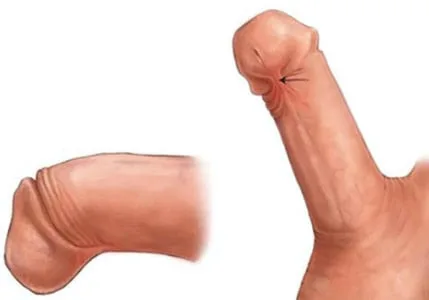
Frenuloplasty is a reconstructive procedure that lengthens or releases the frenulum, the small band of tissue connecting the underside of the glans to the foreskin.
When this band is abnormally short or tight, it is called frenulum breve.
A short frenulum can restrict normal foreskin movement and pull the glans downward during erection.
Frenuloplasty releases this tension while preserving the foreskin.
What symptoms can a short frenulum cause?
Frenulum breve may cause:
Pain during erections
Pain during intercourse
Pain during masturbation
Downward pulling of the glans
Tearing of the frenulum
Bleeding after intercourse
Difficulty retracting the foreskin fully
Recurrent soreness
Fear of sexual activity because of tearing
Some men have mild tightness only when erect, while others experience repeated tearing.
How is frenuloplasty performed?
The frenulum is examined and the area is anesthetized.
The surgeon makes a controlled incision through the tight frenular tissue.
The incision is then closed in a different direction so that the frenulum becomes effectively longer and more flexible.
Absorbable sutures are commonly used.
The goal is to:
Reduce tension
Improve foreskin mobility
Prevent recurrent tearing
Preserve normal anatomy
What is the difference between frenuloplasty and frenulectomy?
Frenuloplasty lengthens and reconstructs the existing frenulum.
Frenulectomy removes part or all of the restrictive frenular tissue.
Both can relieve tension, but frenuloplasty is generally more tissue-preserving.
On your platform, Frenulectomy is better treated as a Technique or alternative approach under Frenuloplasty rather than a separate Procedure page.
Frenuloplasty vs circumcision
These procedures treat different problems.
Frenuloplasty
Best suited when:
The frenulum is short
The foreskin itself is otherwise healthy
The patient wants to preserve the foreskin
Circumcision
More appropriate when:
Significant phimosis is present
The foreskin is scarred
Recurrent balanitis occurs
Lichen sclerosus affects the foreskin
Some patients require both procedures during the same operation.
Does frenuloplasty preserve the foreskin?
Yes, in most cases.
This is one of the main advantages of frenuloplasty.
The foreskin remains intact while the tight frenulum is released.
This makes it useful for men whose main problem is isolated frenulum breve rather than phimosis.
Can frenuloplasty stop tearing?
Often, yes.
Recurrent frenular tears occur because the tissue is placed under excessive tension during erection or intercourse.
By increasing the functional length of the frenulum, surgery reduces this tension and can prevent repeated tearing.
Can a torn frenulum heal without surgery?
A small isolated tear may heal with conservative care.
However, repeated tearing can create scar tissue that makes the frenulum even tighter.
Men with recurrent tearing, significant pain or persistent tightness may benefit from frenuloplasty.
Does frenuloplasty affect erections?
The procedure does not directly alter the erectile tissues responsible for rigidity.
After healing, erections should remain possible.
In men whose erections were painful because of frenular tension, sexual comfort may improve.
Does frenuloplasty affect sensitivity?
Temporary sensitivity changes can occur during healing.
The frenulum contains many sensory nerve endings, so some men may perceive changes in sensation after surgery.
A specific increase or decrease in sexual sensitivity cannot be guaranteed.
Can frenuloplasty treat premature ejaculation?
Frenuloplasty should not be marketed as an established treatment for premature ejaculation.
Although frenular sensitivity may influence sexual sensation in some individuals, evidence is insufficient to present frenuloplasty as a standard PE treatment.
Its primary indication is mechanical frenular tightness.
Does frenuloplasty increase penile length?
No.
It releases a short frenulum and can allow the glans and foreskin to move more freely, but it does not increase the anatomical length or girth of the penis.
Why can the glans bend downward with frenulum breve?
During erection, a short frenulum can act like a tight tether on the underside of the glans.
This can produce:
Ventral pulling
Pain
Difficulty retracting the foreskin
Increased risk of tearing
Releasing the tight tissue allows the glans and foreskin to move with less tension.
Can frenuloplasty be combined with other procedures?
Yes.
Depending on anatomy, it may be combined with:
Adult circumcision
Preputioplasty
Other foreskin reconstruction
However, unnecessary combination surgery should be avoided when isolated frenulum breve can be treated with frenuloplasty alone.
Why surgeon experience matters
Frenuloplasty is generally a small procedure, but careful technique matters because the frenulum is:
Highly vascular
Sensitive
Close to the urethral opening
Important to foreskin mechanics
Poor technique can lead to:
Bleeding
Excessive scarring
Persistent tightness
Cosmetic dissatisfaction
An experienced urologist or andrologist can tailor the release to the individual anatomy.
Who it is for
- •You have a short penile frenulum causing pain during erection or intercourse.
- •The glans is pulled downward during erection because of frenular tension.
- •You experience recurrent frenulum tearing.
- •You have repeated bleeding from the frenulum after intercourse or masturbation.
- •Foreskin retraction is limited by the frenulum rather than by true phimosis.
- •Your foreskin is otherwise healthy and you want to preserve it.
- •Conservative measures have not adequately relieved symptoms.
- •You understand that the procedure treats mechanical tightness rather than erectile dysfunction or premature ejaculation.
- •You are medically fit for a minor surgical procedure.
- •Your main problem is severe adult phimosis caused by a scarred foreskin rather than frenular tightness.
- •You have active balanitis or another untreated genital infection.
- •You have uncontrolled bleeding risk.
- •You are medically unsuitable for even minor elective surgery.
- •Your main goal is penile enlargement.
- •Your main complaint is premature ejaculation without evidence of frenulum breve.
- •Your main complaint is premature ejaculation without evidence of frenulum breve.
- •Significant foreskin disease means circumcision is a more appropriate treatment.
- •You are unwilling to avoid sexual activity during wound healing.
Preparing for surgery
What recovery looks like
Risks and complications
Common questions
What is frenuloplasty?
What is frenulum breve?
How do I know if my frenulum is too short?
Does frenuloplasty require circumcision?
When is circumcision also needed?
What is the difference between frenuloplasty and frenulectomy?
Which is better: frenuloplasty or frenulectomy?
Can a short frenulum tear during sex?
Can a torn frenulum heal on its own?
Will frenuloplasty stop recurrent tearing?
Does frenuloplasty improve foreskin movement?
Does frenuloplasty affect erections?
Does frenuloplasty affect sensitivity?
Does frenuloplasty treat premature ejaculation?
Does frenuloplasty increase penis size?
How long does frenuloplasty take?
What anesthesia is used?
Do I need to stay in hospital?
How long should I stay in Turkey?
When can I return to work?
When can I exercise?
When can I have sex?
What happens to the stitches?
Can frenulum breve return?
What if frenuloplasty does not solve the problem?
Which doctor performs frenuloplasty?
Patient reviews
Been treated? Your honest review of Frenuloplasty helps the next patient.
No one has reviewed this yet. If you have been treated, your experience would help the next person.
Write the first reviewSources
- Clinical series evaluating long-term outcomes after frenuloplasty and reporting high patient satisfaction with a relatively low subsequent circumcision rate. https://pubmed.ncbi.nlm.nih.gov/22176714/
- Long-term clinical experience evaluating frenuloplasty as a foreskin-preserving alternative to circumcision in selected men with frenular symptoms. https://pubmed.ncbi.nlm.nih.gov/?term=penile+frenuloplasty+frenular+pain+scarring
- Clinical patient guidance covering indications, technique, recovery and potential complications of penile frenuloplasty. https://www.baus.org.uk/patients/conditions/13/frenuloplasty/