
Penile Prosthesis Salvage Surgery
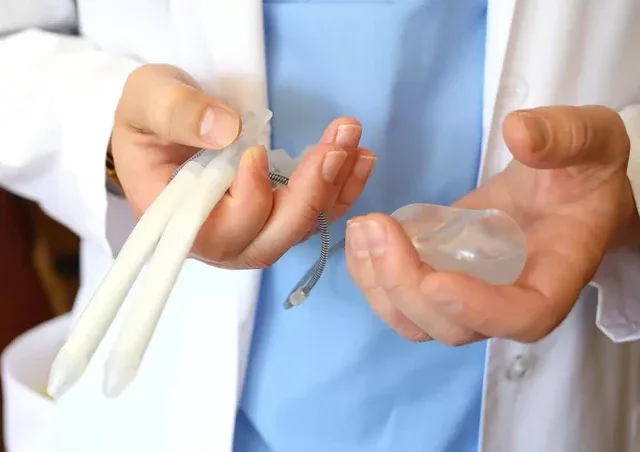
Penile prosthesis salvage surgery is an infection-control operation in which an infected penile implant is removed, the prosthetic spaces are thoroughly cleaned and irrigated, and a new penile prosthesis is implanted during the same operation when clinically appropriate. The aim is to eradicate infection while preserving corporal space, penile anatomy and the possibility of continued prosthesis function without waiting months for delayed reimplantation.
 ✓ Clinician-reviewed information
- Penile prosthesis salvage surgery treats an infected penile implant by removing the infected device, performing extensive surgical washout and immediately placing a new prosthesis in selected patients.
- Immediate salvage can avoid the months-long implant-free period associated with removal followed by delayed reimplantation.
- Published evidence reports infection-free salvage outcomes above 80% in appropriately selected patients, although results vary between studies and patient groups.
- Either an inflatable or malleable prosthesis may be used during salvage, with malleable implants increasingly used as a temporary or definitive option.
- Not every infected penile implant is suitable for immediate salvage; severe systemic infection, tissue necrosis, extensive erosion or unstable medical conditions can change the treatment strategy.
About penile prosthesis salvage surgery
Penile prosthesis salvage surgery is a specialized operation used to manage infection of a penile implant.
Traditionally, an infected prosthesis was completely removed and the patient waited for the infection and tissues to heal before receiving another implant months later.
The problem with this approach is that the corporal spaces that previously contained the implant can develop substantial scar tissue after removal.
This may lead to:
Corporal fibrosis
Loss of corporal space
Penile shortening
More difficult future implantation
Need for narrower cylinders
More complex reconstructive surgery
Immediate salvage was developed to address these problems.
During salvage surgery, the infected prosthesis is removed, contaminated tissue and prosthetic spaces are thoroughly cleaned, and a new prosthesis is implanted during the same operation when the clinical situation permits.
The European Association of Urology recognizes immediate salvage with washout and replacement as an alternative management strategy for penile prosthesis infection, with successful salvage reported in more than 80% of cases.
What is an infected penile prosthesis?
A penile prosthesis infection occurs when microorganisms colonize the implant or surrounding surgical tissues.
Because the prosthesis is a foreign body, bacteria can adhere to its surface and form a biofilm.
Biofilm can make prosthetic infections difficult to eradicate using antibiotics alone.
This is why established penile implant infection generally requires surgical management rather than simply prescribing antibiotics and leaving the infected device in place.
What are the signs of penile implant infection?
Possible signs include:
Persistent or increasing penile pain
Scrotal pain
Redness
Swelling
Wound drainage
Pus or abnormal discharge
Incision breakdown
Implant exposure
Pump fixation to the scrotal skin
Fever
Chills
Increasing tenderness
Erosion
Persistent unexplained discomfort around the prosthesis
Some infections are obvious and acute.
Others are more indolent and may present with persistent pain, pump adherence to the skin or subtle wound changes.
A suspected infection should be evaluated promptly by a prosthetic urologist.
Why aren't antibiotics alone enough?
Antibiotics are an important part of treatment, but an established prosthetic infection is difficult to cure while contaminated foreign material remains inside the body.
Bacteria can attach to the implant surface and develop protective biofilm.
Consequently, treatment generally requires removal of the infected prosthetic material in addition to antimicrobial therapy.
The EAU states that prosthetic infection requires prosthesis removal and antibiotics, with immediate salvage and replacement being an alternative in selected patients.
What happens during salvage surgery?
The precise protocol varies between surgeons and clinical situations.
In general, the surgeon:
Exposes and removes the infected prosthesis.
Removes contaminated foreign material.
Inspects the corporal spaces and surrounding tissues.
Obtains cultures when clinically appropriate.
Removes unhealthy or infected tissue where necessary.
Performs extensive irrigation/washout of the prosthetic spaces.
Reassesses tissue viability and infection extent.
Places a new penile prosthesis when immediate reimplantation is considered appropriate.
Provides antimicrobial treatment based on the clinical situation and microbiological findings.
The replacement device may be inflatable or malleable.
What is the Mulcahy salvage procedure?
The Mulcahy salvage procedure is the classic approach associated with immediate treatment of penile prosthesis infection.
The fundamental concept is:
Remove infected prosthetic material → extensively irrigate the implant spaces → immediately place a new prosthesis.
The technique was developed to avoid delayed reimplantation and the fibrosis and penile shortening that may follow prolonged absence of a device.
Long-term experience with the original approach reported infection-free outcomes in approximately 82% of evaluated patients.
Modern salvage surgery has evolved considerably, and individual surgeons may modify irrigation solutions, antimicrobial protocols, device choice and operative technique.
What is malleable implant salvage?
Instead of immediately replacing an infected inflatable penile prosthesis with another inflatable system, the surgeon may insert a malleable penile prosthesis after removing the infected device and completing washout.
This approach is sometimes called the malleable implant salvage technique.
A malleable prosthesis has fewer components than an inflatable system and avoids immediate replacement of the scrotal pump and abdominal/pelvic reservoir.
It also maintains corporal space while the patient recovers.
A multicenter study of 58 men undergoing infected inflatable prosthesis removal followed by malleable salvage reported that 54 of 58 patients (93%) remained infection-free.
Is the malleable implant temporary?
Not necessarily.
Some patients are satisfied with the malleable prosthesis and choose to keep it permanently.
Others later choose conversion to an inflatable penile prosthesis.
In the multicenter malleable-salvage study, 17 of the 54 infection-free patients subsequently underwent conversion to an inflatable prosthesis, on average 6.7 months after salvage.
Therefore, malleable salvage can function as either:
A definitive penile prosthesis
A space-preserving bridge to later inflatable implantation
Can an inflatable implant be placed immediately?
Yes, selected patients may undergo removal of an infected prosthesis, washout and immediate implantation of a new inflatable penile prosthesis.
The decision between inflatable and malleable salvage depends on factors including:
Extent of infection
Tissue quality
Corporal fibrosis
Previous operations
Surgeon experience
Patient preference
Device availability
Overall medical condition
No single salvage strategy is appropriate for every patient.
Why avoid delayed reimplantation when possible?
If an infected prosthesis is removed without immediate replacement, the empty corporal spaces can contract and scar.
This may cause:
Corporal fibrosis
Loss of penile length
More difficult dilation
Increased technical difficulty during later implantation
Need for smaller or narrower cylinders
Immediate salvage attempts to preserve the space previously occupied by the implant.
A 2025 review emphasizes preservation of penile length and avoidance of difficult delayed reimplantation among the potential advantages of immediate salvage.
Is salvage always possible?
No.
The surgeon must determine whether immediate replacement is safe and technically appropriate.
Factors such as severe systemic illness, extensive tissue destruction, necrosis, severe erosion or other high-risk findings may favor explantation without immediate replacement.
Older literature identified sepsis, ketoacidosis, penile necrosis and bilateral urethral cylinder erosion among important relative contraindications to salvage. Modern practice has expanded salvage candidacy in some centers, but patient selection remains individualized.
Salvage surgery vs revision surgery
These are related but different procedures.
Penile Prosthesis Revision Surgery primarily addresses problems such as:
Mechanical failure
Device malfunction
Malposition
Cylinder problems
Pump problems
Reservoir problems
Penile Prosthesis Salvage Surgery specifically addresses:
prosthesis infection requiring removal, washout and potential immediate replacement.
Keeping these as separate pages is appropriate clinically and for search intent.
Who it is for
- •You have a confirmed or strongly suspected penile prosthesis infection requiring surgical treatment.
- •Your infected prosthesis needs to be removed and the surgeon believes immediate replacement may be safely attempted.
- •You have persistent implant-related pain accompanied by clinical findings suggesting infection.
- •You have wound drainage or other local evidence of prosthesis infection without a contraindication to immediate salvage.
- •Your implant is infected but penile and corporal tissues remain sufficiently viable for reconstruction.
- •You want to preserve corporal space and avoid delayed reimplantation when immediate salvage is medically appropriate.
- •You understand that the replacement prosthesis may need to be malleable rather than inflatable depending on operative findings.
- •You are medically stable enough to undergo anesthesia and reconstructive prosthetic surgery.
- •You understand that salvage can fail and that complete device removal may still become necessary.
- •You are medically unstable or have uncontrolled sepsis requiring urgent stabilization.
- •There is extensive penile tissue necrosis that makes immediate prosthesis replacement unsafe.
- •Severe urethral injury or extensive prosthesis erosion prevents safe immediate reimplantation.
- •The infection has caused tissue destruction that cannot adequately support a replacement prosthesis.
- •You have uncontrolled diabetic ketoacidosis or another serious metabolic emergency.
- •Your anesthetic or surgical risk is currently unacceptable.
- •The surgeon determines during surgery that adequate infection control or tissue viability cannot be achieved.
- •You expect salvage surgery to guarantee preservation or enlargement of penile length.
- •You are unwilling to accept the possibility that the implant may need to be completely removed without immediate replacement.
- •You have symptoms of severe systemic infection and are planning to delay urgent local medical care in order to travel abroad.
Preparing for surgery
What recovery looks like
Risks and complications
Common questions
What is penile prosthesis salvage surgery?
What is the Mulcahy salvage procedure?
What is the success rate of penile implant salvage surgery?
Does the infected penile implant have to be removed?
Can antibiotics cure an infected penile implant without surgery?
Can a new penile implant be placed immediately after removing the infected one?
Why not simply remove the implant and wait?
What type of implant is used during salvage?
Why would a malleable implant be used?
How successful is malleable penile implant salvage?
Can the malleable implant later be changed to an inflatable implant?
Is a malleable implant always temporary after salvage?
Can salvage surgery fail?
Is everyone with an infected implant suitable for immediate salvage?
Can I have salvage surgery if I have diabetes?
How long does penile prosthesis salvage surgery take?
How long should I stay in Turkey?
When can I return to work?
When can I have sex after salvage surgery?
Can salvage surgery restore lost penile length?
What happens if salvage is not possible?
Can I fly to Turkey if my penile implant is infected?
Which surgeon should perform penile implant salvage?
Patient reviews
Been treated? Your honest review of Penile Prosthesis Salvage Surgery helps the next patient.
No one has reviewed this yet. If you have been treated, your experience would help the next person.
Write the first reviewSources
- European Association of Urology — Sexual and Reproductive Health Guidelines https://uroweb.org/guidelines/sexual-and-reproductivehealth/chapter/management-of-erectile-dysfunction
- Salvage procedures for infected penile implants: A comprehensive review and analysis of functional outcomes https://pubmed.ncbi.nlm.nih.gov/38697265/
- A multicenter study of 58 patients reported a 93% infection-free rate following malleable salvage. https://pubmed.ncbi.nlm.nih.gov/26343986/
- Long-term experience with immediate salvage reported 82% of evaluated patients without signs of infection. https://pubmed.ncbi.nlm.nih.gov/10647660/
- Contemporary review of immediate salvage, surgical innovations and antimicrobial strategies. https://pubmed.ncbi.nlm.nih.gov/40707690/
- Review of the development and evolution of penile prosthesis salvage. https://pubmed.ncbi.nlm.nih.gov/35027720/