
Teratozoospermia (Abnormal Sperm Morphology)
Teratozoospermia is a semen-analysis finding in which a lower-than-expected proportion of sperm have normal shape and structure. Abnormal sperm morphology can involve the head, midpiece, or tail and may be associated with reduced fertility potential, although morphology alone cannot determine whether a man is fertile or infertile.
Also known as: Abnormal sperm morphology, Poor sperm morphology, Low sperm morphology, Abnormally shaped sperm, Sperm morphology problems, Teratospermia, Teratozoospermia, Low normal forms, Abnormal sperm shape, Poor sperm shape
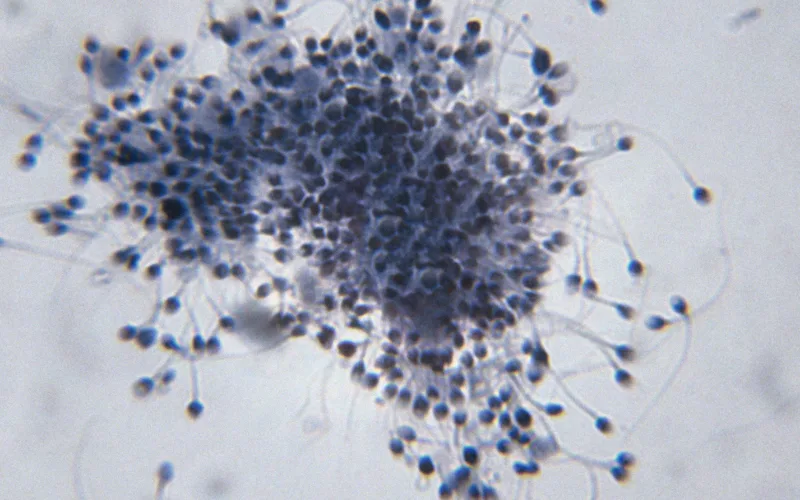 ✓ Clinician-reviewed information
- Teratozoospermia means a lower-than-expected percentage of sperm have normal morphology on semen analysis.
- Sperm morphology evaluates the structure of the sperm head, midpiece, and tail.
- Abnormal morphology may occur alone or together with low sperm count and poor sperm motility.
- A low morphology percentage does not by itself mean that natural conception is impossible.
- Evaluation focuses on the complete semen analysis, reproductive history, potentially treatable causes, and fertility factors affecting both partners.
Overview
Teratozoospermia refers to an increased proportion of sperm with abnormal morphology.
Morphology describes the physical shape and structure of sperm when examined under a microscope.
A normally formed sperm has several important components:
Head
Acrosome
Midpiece
Tail
Abnormalities can affect one or several of these structures.
Laboratories assess sperm morphology using standardized criteria and report the percentage of sperm classified as morphologically normal.
A low percentage of normal forms may be described as teratozoospermia.
What does abnormal sperm morphology look like?
Morphological abnormalities can involve different parts of the sperm.
Head abnormalities
Examples include:
Large heads
Small heads
Tapered heads
Irregular heads
Round heads
Multiple heads
Abnormal acrosomes
Vacuolated heads
Midpiece abnormalities
Examples include:
Thick midpieces
Bent midpieces
Irregular midpieces
Abnormal attachment of the midpiece to the head
Tail abnormalities
Examples include:
Short tails
Bent tails
Coiled tails
Irregular tails
Multiple tails
Many semen samples contain some abnormally shaped sperm. The important measurement is the proportion meeting standardized normal morphology criteria.
What does 4% normal morphology mean?
Under strict morphology assessment, the WHO Sixth Edition reports a lower fifth-centile reference value of approximately 4% normal forms in the reference population of fertile men.
This number is often misunderstood.
It does not mean that:
96% of the sperm are necessarily incapable of fertilization.
A man with 3% morphology is infertile.
A man with 5% morphology is automatically fertile.
Semen reference values describe distributions observed in fertile populations and are not absolute diagnostic boundaries between fertility and infertility.
Morphology should therefore be interpreted together with sperm concentration, motility, total sperm number, reproductive history, and female-partner factors.
Is teratozoospermia the same as infertility?
No.
Teratozoospermia can be associated with reduced fertility potential, particularly when severe or combined with other semen abnormalities.
However, morphology alone has limited ability to predict whether an individual couple will conceive naturally.
Some men with very low percentages of normal forms achieve natural pregnancies.
Conversely, a normal morphology result does not guarantee fertility.
What is OAT syndrome?
When three major sperm abnormalities occur together, the condition is often called oligoasthenoteratozoospermia (OAT).
This means:
Oligozoospermia: low sperm concentration
Asthenozoospermia: reduced sperm motility
Teratozoospermia: abnormal sperm morphology
OAT can represent more substantial impairment of spermatogenesis than an isolated abnormality and generally warrants comprehensive male infertility evaluation.
Types of teratozoospermia (abnormal sperm morphology)
Symptoms
Causes
Risk factors
How it is diagnosed
Teratozoospermia is identified through semen analysis with sperm morphology assessment.
Semen analysis
A semen analysis evaluates several parameters, including:
Semen volume
Sperm concentration
Total sperm number
Progressive motility
Total motility
Sperm morphology
Vitality when indicated
Morphology should not be interpreted independently from the other findings.
Sperm morphology assessment
A laboratory prepares and stains a semen sample so individual sperm can be examined microscopically.
The embryologist or laboratory professional evaluates the:
Head
Acrosomal region
Midpiece
Tail
Overall proportions of the sperm
Strict criteria are used to determine which sperm meet the definition of a normal form.
Repeat semen analysis
Semen parameters naturally vary.
An abnormal result may therefore be repeated, particularly when it could influence major fertility decisions.
Factors that may temporarily alter semen quality include:
Fever
Recent illness
Abstinence duration
Medications
Sample collection problems
Laboratory variability
Male fertility assessment
Persistent abnormal morphology may prompt evaluation of:
Fertility history
Previous pregnancies
Duration of infertility
Testicular development
Varicocele
Genital infections
Testicular trauma
Previous surgery
Medications
Smoking
Heat exposure
Occupational exposures
Anabolic steroid or testosterone use
Hormonal testing
Hormonal testing may be appropriate when abnormal morphology occurs together with low sperm concentration or other evidence of impaired testicular function.
Potential tests include:
FSH
LH
Total testosterone
Prolactin when indicated
Genetic testing
Routine genetic testing is not required simply because morphology is below the reference range.
However, genetic testing becomes particularly important when a characteristic severe monomorphic abnormality is present.
Examples include:
Globozoospermia
Macrozoospermia
Severe flagellar abnormalities
These patterns can be associated with specific genetic disorders and may have important implications for assisted reproduction.
- A semen analysis shows very low normal sperm morphology.
- Abnormal morphology persists on repeat testing.
- You and your partner have difficulty conceiving.
- Low morphology occurs together with low sperm count or poor motility.
- Your report shows oligoasthenoteratozoospermia.
- The laboratory reports a specific abnormal pattern such as globozoospermia.
- You have a varicocele and abnormal semen parameters.
- You have previously received chemotherapy or radiotherapy.
- You have used anabolic steroids or testosterone.
- You want to understand whether natural conception, IUI, IVF, or ICSI is appropriate.
- Stop smoking.
- Maintain a healthy body weight.
- Exercise regularly.
- Avoid anabolic steroid misuse.
- Avoid unnecessary testosterone therapy when fertility is desired.
- Reduce excessive testicular heat exposure.
- Use workplace protection around reproductive toxins.
- Seek appropriate treatment for genital infections.
- Manage diabetes and metabolic disease.
- Avoid excessive alcohol consumption.
- Discuss fertility-toxic medications with a doctor.
- Seek evaluation for clinically significant varicocele when infertility is present.
- Maintain balanced nutrition.
Common questions
What is teratozoospermia?
What does sperm morphology mean?
What is normal sperm morphology?
Is 3% sperm morphology bad?
Can you get pregnant naturally with low sperm morphology?
Does abnormal sperm shape mean abnormal DNA?
Can teratozoospermia improve?
Can varicocele cause abnormal sperm morphology?
Can smoking affect sperm morphology?
Does abnormal morphology cause miscarriage?
Do supplements improve sperm morphology?
Can IUI work with teratozoospermia?
Can IVF treat teratozoospermia?
When is ICSI used for abnormal sperm morphology?
What is globozoospermia?
What is macrozoospermia?
What is OAT syndrome?
Which doctor treats teratozoospermia?
Sources
- WHO Laboratory Manual for the Examination and Processing of Human Semen, Sixth Edition https://www.who.int/publications/i/item/9789240030787
- EAU Guidelines on Sexual and Reproductive Health — Male Infertility https://uroweb.org/guidelines/sexual-and-reproductive-health/chapter/male-infertility
- Diagnosis and Treatment of Infertility in Men: AUA/ASRM Guideline https://www.auanet.org/guidelines-and-quality/guidelines/male-infertility