
TURED — Transurethral Resection of the Ejaculatory Ducts
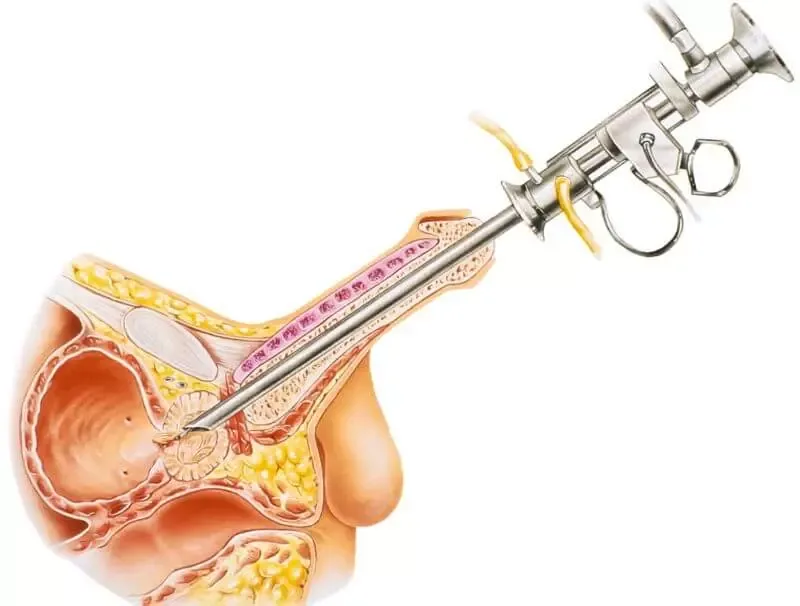
Transurethral resection of the ejaculatory ducts (TURED) is an endoscopic procedure used to open blocked ejaculatory ducts in selected men with ejaculatory duct obstruction. The surgeon passes an instrument through the urethra and removes or incises obstructing tissue near the ejaculatory ducts, with the goal of restoring semen flow, improving semen parameters and potentially improving fertility.
 ✓ Clinician-reviewed information
- TURED is an endoscopic procedure that opens blocked ejaculatory ducts through the urethra without an external incision.
- It is used for selected men with confirmed or strongly suspected ejaculatory duct obstruction.
- The procedure may improve semen volume, sperm concentration and sperm motility, and some men may regain sperm in the ejaculate after obstructive azoospermia.
- Natural pregnancy can occur after successful treatment, but fertility outcomes depend on both partners and the underlying cause.
- Proper diagnosis is essential because TURED should not be performed simply for unexplained azoospermia without evidence of distal obstruction.
About tured — transurethral resection of the ejaculatory ducts
TURED stands for Transurethral Resection of the Ejaculatory Ducts.
It is an endoscopic urological procedure used to treat ejaculatory duct obstruction.
The ejaculatory ducts pass through the prostate and carry sperm-containing fluid from the vas deferens and seminal vesicles into the urethra.
When one or both ducts are blocked, sperm and seminal fluid may not enter the ejaculate normally.
TURED removes or opens the obstructing tissue from inside the urethra.
Why can ejaculatory duct obstruction cause infertility?
The seminal vesicles contribute a large portion of normal semen volume.
When both ejaculatory ducts are completely obstructed, typical semen findings may include:
Low semen volume
Azoospermia
Acidic semen
Partial obstruction may instead cause:
Severe oligozoospermia
Poor sperm motility
Reduced semen volume
Painful ejaculation
Haematospermia
The testes may still produce sperm normally.
The problem is that sperm cannot reach the ejaculate.
How is TURED performed?
The surgeon inserts a resectoscope or similar endoscopic instrument through the urethra.
No external skin incision is usually required.
The surgeon advances the instrument to the prostatic urethra, where the ejaculatory ducts open.
Obstructing tissue is then carefully incised or resected.
Depending on the cause, the operation may address:
Scar tissue
Midline cysts
Ductal obstruction
Calcification
Other obstructing lesions
The goal is to create a functional opening so seminal-vesicle and sperm-containing fluid can drain into the urethra.
How is the obstruction located?
Diagnosis and surgical planning may use:
Semen analysis
Semen pH
Transrectal ultrasound
Pelvic MRI in selected cases
Seminal vesicle findings
Prostatic cyst identification
TRUS is particularly useful when low semen volume, acidic semen and severe oligozoospermia or azoospermia suggest distal obstruction.
What causes ejaculatory duct obstruction?
Potential causes include:
Congenital duct abnormalities
Midline prostatic cyst
Müllerian duct cyst
Prostatic utricle cyst
Ejaculatory duct cyst
Infection
Inflammation
Scarring
Calcification
Stones
Previous prostate procedures
Some men have no clearly identifiable cause.
Complete vs partial obstruction
TURED can be used in selected men with either complete or partial obstruction.
Complete obstruction
Both ducts are fully blocked.
The patient may have:
Azoospermia
Very low semen volume
Acidic semen
Partial obstruction
Some seminal fluid and sperm still pass.
The patient may have:
Severe oligozoospermia
Poor motility
Reduced semen volume
Painful ejaculation
Haematospermia
The clinical benefit of surgery depends partly on the type and severity of obstruction.
Does TURED restore natural fertility?
Potentially, yes.
Unlike sperm retrieval procedures such as PESA, MESA or TESE, TURED attempts to restore natural passage of sperm into the semen.
If sperm return in adequate numbers and female fertility is favorable, natural conception may become possible.
However, some couples may still require assisted reproduction after surgery.
How soon can semen improve?
Changes in semen parameters may become apparent over several weeks to months.
Semen analyses are therefore repeated after surgery.
The fertility team may track:
Semen volume
Sperm concentration
Motility
Total motile sperm count
Improvement can continue over time.
What if sperm do not return?
If azoospermia persists after TURED, possible explanations include:
Incomplete relief of obstruction
Recurrent scarring
Additional reproductive-tract obstruction
Coexisting impaired sperm production
The patient may then require further evaluation or sperm retrieval with IVF/ICSI.
TURED vs sperm retrieval
These are different treatment strategies.
TURED attempts to restore sperm to the natural ejaculate.
Sperm retrieval bypasses the obstruction and obtains sperm directly from the epididymis or testicle.
TURED may be attractive when natural conception is a realistic goal and anatomy is suitable for correction.
Sperm retrieval with ICSI may be more appropriate when:
Female partner age is advanced
Ovarian reserve is reduced
IVF is already required
Distal reconstruction is unlikely to succeed
Faster assisted reproduction is preferred
Why surgeon experience matters
The ejaculatory ducts are small structures located close to:
Prostate
Urethra
Bladder neck
Seminal vesicles
Overly aggressive resection can create complications.
The procedure should therefore be performed by a urologist experienced in male infertility and endoscopic reproductive surgery.
Who it is for
- •You have confirmed or strongly suspected ejaculatory duct obstruction.
- •Semen analysis shows low volume together with azoospermia or severe oligozoospermia.
- •Semen pH and other findings support distal obstruction.
- •TRUS or MRI identifies findings compatible with ejaculatory duct obstruction.
- •You have painful ejaculation or haematospermia together with evidence of duct obstruction.
- •Your testes are producing sperm adequately but sperm passage is blocked distally.
- •You want to attempt restoration of sperm to the natural ejaculate.
- •You understand that semen improvement and pregnancy are not guaranteed.
- •You are medically fit for endoscopic surgery and anesthesia.
- •You have non-obstructive azoospermia caused primarily by severe impairment of sperm production.
- •There is no convincing evidence of ejaculatory duct obstruction.
- •Your azoospermia has not been adequately investigated.
- •You have untreated urinary, genital or systemic infection.
- •You are medically unfit for elective surgery or anesthesia.
- •You expect the procedure to guarantee natural pregnancy.
- •Female fertility factors make immediate IVF/ICSI clearly more appropriate.
- •You have a different level of reproductive-tract obstruction that TURED cannot correct.
Preparing for surgery
What recovery looks like
Risks and complications
Common questions
What is TURED?
What does TURED treat?
Does TURED require an external incision?
Can TURED treat azoospermia?
Can TURED improve low sperm count?
How is ejaculatory duct obstruction diagnosed?
Does low semen volume mean I need TURED?
What is the success rate of TURED?
Can natural pregnancy occur after TURED?
How quickly do sperm return?
Does TURED cure infertility?
Can the obstruction come back?
Is TURED painful?
How long does surgery take?
Do I need to stay in hospital?
How long should I stay in Turkey?
When can I return to work?
When can I have sex?
Will semen volume increase?
What if TURED does not work?
Is TURED better than PESA or TESE?
Which doctor performs TURED?
Patient reviews
Been treated? Your honest review of TURED — Transurethral Resection of the Ejaculatory Ducts helps the next patient.
No one has reviewed this yet. If you have been treated, your experience would help the next person.
Write the first reviewSources
- EAU Guidelines on Sexual and Reproductive Health — Male Infertility https://uroweb.org/guidelines/sexual-and-reproductive-health/chapter/male-infertility
- Diagnosis and management of infertility due to ejaculatory duct obstruction: summary evidence https://pubmed.ncbi.nlm.nih.gov/33566474/
- Ejaculatory duct obstruction: current diagnosis and treatment https://pubmed.ncbi.nlm.nih.gov/23733548/
- An update on the diagnosis and management of ejaculatory duct obstruction https://pubmed.ncbi.nlm.nih.gov/26620608/
- Diagnosis and Treatment of Infertility in Men: AUA/ASRM Guideline https://www.auanet.org/guidelines-and-quality/guidelines/male-infertility