
Torosa® Saline-Filled Testicular Prosthesis
The Torosa is a saline-filled testicular prosthesis made by Coloplast for men and boys who are missing one or both testicles, whether from congenital absence or surgical removal. It is a silicone elastomer shell filled with sterile saline during surgery, implanted entirely inside the scrotum, and available in four sizes covering paediatric, adolescent and adult patients.
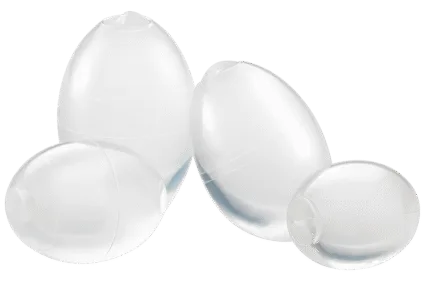
- The only FDA-approved testicular implant — Approved under a premarket approval, not a 510(k) clearance.
- Saline-filled, not gel-filled — US manufacture of silicone gel-filled testicular prostheses ended in 1995 amid wider concerns about implant safety, and the saline design was developed as the replacement.
- Four sizes — Extra small 7 cc, small 11 cc, medium 16 cc and large 20 cc, covering paediatric through adult patients.
- Self-sealing fill port — The surgeon fills the device with sterile saline during the operation, allowing volume to be matched to the remaining testicle.
- Suture fixation tab — Allows the prosthesis to be anchored so it does not ride up or move within the scrotum.
- Cosmetic only — It restores appearance and feel. It produces no testosterone, no sperm and has no endocrine function.
- Can be placed at the same time as orchiectomy — Published evidence supports simultaneous placement during radical orchidectomy for testicular cancer.
- Complications are real but uncommon — The pivotal trial reported a complication rate directly related to the prosthesis of around 14.5%, chiefly extrusion and migration.
About the Torosa® Saline-Filled Testicular Prosthesis
What Is the Torosa Testicular Prosthesis?
The Torosa is a surgically implanted artificial testicle.
It is designed to replicate the size, shape and feel of a natural testicle following surgical removal, or where a testicle never developed.
It consists of a silicone elastomer shell filled with sterile saline.
The device sits entirely within the scrotum. Nothing is visible or palpable outside the body except the prosthesis itself, which feels like a testicle.
It is manufactured by Coloplast.
Why Saline and Not Gel
This is the historical fact that explains the entire design.
Testicular prostheses have been used for around 50 years. In 1995, manufacture of the silicone gel-filled testicular prosthesis in the United States was discontinued because of concerns about the safety profiles of other silicone implants.
That left American patients with no approved testicular prosthesis at all.
The saline-filled device was developed and formally trialled as the replacement, and the trial was designed specifically to address the rheumatological question that had driven the gel implants off the market.
The Torosa's shell is still silicone elastomer, but the filler is saline.
The Self-Sealing Fill Port
The Torosa is supplied empty and filled by the surgeon during the operation.
A self-sealing injection port allows the device to be filled with sterile saline solution.
Coloplast specifies sterile, isotonic, pyrogen-free Sodium Chloride USP.
The practical advantage is symmetry. A man with one remaining testicle wants the prosthesis to match it, and intraoperative filling lets the surgeon fine-tune the volume rather than accept whatever a pre-filled device happens to be.
The Suture Fixation Tab
The device has a suture tab at its lower pole.
The tab enables secure placement of the device in a set position, if desired, eliminating unwanted movement within the scrotum.
This addresses one of the most common complaints about testicular prostheses historically, which is that the implant rides high or sits in a position that feels obviously wrong.
Fixation is a surgeon's choice rather than mandatory, and it is a reasonable thing for a patient to ask about before surgery.
The Four Sizes
Coloplast supplies four sizes to cover paediatric, adolescent and adult patients:
Extra small — 2.2 cm × 3.0 cm, 7 cc
Small — 2.5 cm × 3.5 cm, 11 cc
Medium — 2.7 cm × 4.0 cm, 16 cc
Large — 2.9 cm × 4.5 cm, 20 cc
A single-use sizing guide is available to surgeons to help select the right size against the patient's own anatomy.
Sizing is the single most important factor in satisfaction. Published work on patient dissatisfaction with testicular prostheses identifies implant sizing, shape, firmness and surgical placement technique as the recurring themes.
Who the Torosa Is For
Coloplast lists the indications as congenital anorchism, monorchism, cryptorchidism, orchiectomy, prolonged testicular torsion resulting in death of a testicle, and other conditions or procedures.
The formal indication statement is narrower: the device is intended for use when cosmetic testicular replacement is indicated, either in agenesis or following surgical removal of a testicle.
In practice the largest group is men who have had a testicle removed for testicular cancer.
What It Does Not Do
This needs stating clearly and early on the page.
The implant is for cosmetic purposes only and does not act as a functioning testicle.
It produces no testosterone.
It produces no sperm.
It has no effect on fertility, libido, erectile function or hormone levels.
A man who has lost both testicles will still need testosterone replacement, and the prosthesis does nothing to change that.
Timing: At Orchiectomy or Later
The prosthesis can be implanted either at the time of orchiectomy or at a later date.
Published evidence supports simultaneous placement. An audit of 904 men undergoing radical orchidectomy for testicular cancer found that 236 received a prosthesis, and only one of those 236, around 0.4%, required removal of the prosthesis.
Placing the implant at the same operation avoids a second anaesthetic and a second recovery.
Delayed placement is still possible and is common in men who declined at the time and changed their minds later, although scrotal contracture after the tissue has healed can make later placement more difficult.
The Counselling Gap
There is a well-documented gap between what patients want and what they are offered.
Following testicle removal, 98% of patients believe it is important to be offered a testicular implant, but only 47% of them are.
This is worth building the page around, because it identifies the real problem. Most men do not decline a prosthesis. They are never told it exists, or they are told at a moment when they are absorbing a cancer diagnosis and cannot process it.
Raising the option early, before the orchiectomy, is the practical fix.
The Pivotal Clinical Trial
The Torosa's approval rests on a multicentre prospective trial.
It was an open-label, multicentre, prospective, case-controlled clinical trial conducted at 18 American tertiary referral centres, described elsewhere as a five-year study.
Adult and paediatric male patients missing one or two testes, without active malignancy or rheumatological disease, were enrolled.
All patients underwent formal rheumatological and urological evaluation both before and after prosthesis placement.
The main outcome measures were safety, assessed through adverse events, and effectiveness, assessed through changes in testis dimension. Quality of life was assessed using validated psychological instruments.
The study concluded that the saline-filled testicular prosthesis can be implanted with few complications and with a low or absent risk of rheumatological disease.
Complication Rate
The trial did not report a complication-free device, and the page should not imply one.
A later review citing that study reports a complication rate directly related to the prosthesis of 14.5%, with a similar paediatric study reporting 10.5%.
The complications described included extrusion and implant migration.
Set against that, the real-world audit of 904 orchidectomy patients found only one removal among 236 prostheses.
The gap between those figures likely reflects the difference between a formal trial capturing every adverse event and an audit capturing removals. Both numbers are useful, and the page is more credible for carrying both.
Extrusion
Extrusion means the prosthesis working its way out through the scrotal skin or wound.
It is the most serious device-specific complication and generally requires removal.
Risk is higher where scrotal tissue is thin, where healing is compromised, or where an oversized prosthesis has been placed under tension.
Coloplast notes that implantation may be difficult or impossible in patients with inadequate scrotal tissue to cover the prosthesis, patients who have undergone prior pelvic radiation therapy, or patients whose wound healing is compromised, such as those with uncontrolled diabetes or poor circulation.
Migration and Malposition
Migration means the prosthesis moving from where it was placed, most often riding upward in the scrotum.
The result is visible and palpable asymmetry, which patients notice and dislike.
The suture tab exists specifically to address this.
Capsular Contracture
Excessive fibrous capsular formation or contracture may occur around any implant placed in contact with soft tissues.
The body forms a fibrous capsule around any implant. If that capsule tightens, the prosthesis can feel harder than expected or be pulled out of position.
This is the same phenomenon well known from breast implants, and patients who have heard of it in that context should be told it applies here too.
Infection
Infection is a risk with any implanted device.
Implantation is contraindicated in the presence of infection or untreated neoplasm.
Sepsis or haemorrhage may result from the placement of any foreign object in the body.
An infected testicular prosthesis usually has to be removed, and reimplantation is delayed until the infection has fully resolved.
Silicone and Autoimmune Disease
The shell is silicone, so this question comes up and the page should answer it directly rather than avoid it.
Coloplast's own labelling states that the device contains solid silicone elastomer, and that the risks and benefits should be carefully considered in patients with lupus, scleroderma, myasthenia gravis or documented silicone sensitivity. It also notes that the possible relationship between silicone and various diseases has been and continues to be the subject of scientific and medical debate.
The pivotal trial was designed with this question in mind, included formal rheumatological evaluation before and after implantation, and concluded that the device could be implanted with a low or absent risk of rheumatological disease.
That is a reassuring finding from a study built to detect the problem. It is not the same as a guarantee, and men with existing autoimmune disease should have the conversation with their surgeon.
Drug Interactions With the Shell
Coloplast notes that the action of drugs such as antimicrobials, chemotherapy agents or steroids in contact with the prosthesis has not been tested by the manufacturer, and their use cannot be recommended.
Any physician choosing to use drugs in combination with the prosthesis must confirm compatibility with silicone elastomer.
This is relevant in testicular cancer, where chemotherapy often follows orchiectomy. It concerns direct contact with the device during surgery rather than systemic treatment afterwards, but it is a question worth putting to the surgical team.
Patient Satisfaction
Satisfaction with testicular prostheses is generally high.
Numerous investigators have reported psychological benefits and high levels of patient satisfaction, and Coloplast cites work finding that 88% of men implanted with a testicular implant said they would undergo the surgery again if necessary.
Dissatisfaction, where it occurs, clusters around size, shape, firmness and position rather than around the decision to have an implant at all.
That is an argument for careful preoperative sizing discussion, not against the device.
Why It Matters Beyond Appearance
The psychological case for offering a prosthesis is stronger than the word "cosmetic" suggests.
Removal of a testicle can produce long-lasting feelings of loss, uneasiness or shame, and simply providing the option of a prosthesis may help alleviate those effects and assist overall recovery.
The literature Coloplast cites extends to sexuality and body image in long-term testicular cancer survivors and to suicide risk in men with testicular cancer.
A page that treats this as purely aesthetic misses what the evidence actually says.
Torosa vs Rigicon Testi10
The Rigicon Testi10 is a contemporary competitor testicular prosthesis.
Published data on it includes a retrospective chart review of short-term revision rates in adolescents and adults.
The Torosa's distinguishing claim is its FDA approval status. Comparative head-to-head data between the two does not exist.
Device availability differs by country, and outside the United States the choice may be made by what the hospital stocks rather than by clinical preference.
Torosa vs Solid Silicone Prostheses
Solid silicone testicular prostheses are used in some markets.
The Torosa's saline fill allows intraoperative volume adjustment, which a solid device cannot offer.
A solid device cannot deflate, whereas any saline-filled implant carries a theoretical risk of leakage, in which case the shell simply softens and the saline is harmlessly absorbed.
Availability rather than design usually determines which a patient receives.
Recovery
Placement is typically an outpatient procedure.
The implant is placed completely inside the body.
Expect scrotal swelling and bruising for one to two weeks, with restriction of heavy lifting and vigorous activity for several weeks.
Supportive underwear is usually recommended during healing.
Follow the operating surgeon's specific instructions rather than generic timelines.
MRI Status
Flag for verification before publishing. No Coloplast MRI conditions statement for the Torosa could be located.
Recommended page wording: patients should tell radiology staff about the implant before any MRI scan, and the implanting centre should be asked for the manufacturer's current MRI guidance.
Do not label the device MR Conditional or MR Safe without a Coloplast document, even though the device is a saline-filled silicone shell.
Regulatory Status
The Torosa is the only testicular implant with FDA approval.
That approval is a premarket approval, the most demanding US device pathway, rather than a 510(k) clearance. The PMA has been amended through subsequent supplements, including one implementing a size inspection step during manufacturing.
Verification note for the editor: confirm the current PMA number and the full supplement history on the FDA PMA database before publishing a specific number, and confirm CE marking and availability outside the United States directly with Coloplast. Coloplast's Torosa material is US-focused and non-US availability could not be verified from public sources. This matters for an international patient audience.
In the United States, federal law restricts this device to sale by or on the order of a physician.
Warranty
Flag for verification before publishing. No Coloplast warranty terms specific to the Torosa could be confirmed.
Do not state or imply a replacement warranty. Obtain the current terms from Coloplast or the implanting centre.
Is this device for you?
- •Men who have had a testicle removed for testicular cancer and want to restore scrotal appearance.
- •Men considering orchiectomy who want to discuss a prosthesis before surgery rather than after.
- •Boys and adolescents with congenital anorchism, monorchism or cryptorchidism, where the four-size range covers paediatric anatomy.
- •Men who have lost a testicle to prolonged torsion resulting in death of the testicle.
- •Patients who want intraoperative size matching to their remaining testicle.
- •Patients concerned about implant migration, where the suture tab allows fixed placement.
- •Patients who specifically want an FDA-approved device.
- •Cosmetic only — No testosterone, no sperm, no endocrine or fertility function whatsoever.
- •Complication rate is not zero — Around 14.5% prosthesis-related complications in the pivotal trial, chiefly extrusion and migration.
- •Extrusion risk in poor tissue — Implantation may be difficult or impossible with inadequate scrotal tissue, prior pelvic radiation, or compromised wound healing.
- •Capsular contracture is possible — As with any implant in contact with soft tissue.
- •Contraindicated with infection or untreated neoplasm.
- •Silicone shell — Risks and benefits need careful consideration in lupus, scleroderma, myasthenia gravis or documented silicone sensitivity.
- •Drug compatibility untested — Direct contact between the prosthesis and antimicrobials, chemotherapy agents or steroids has not been tested by the manufacturer.
- •Sizing drives satisfaction — Dissatisfaction clusters around size, shape, firmness and position, so preoperative discussion matters.
- •Availability outside the US unverified — Confirm before assuming access in a given country.
- •No confirmed MRI statement or warranty terms — Both need verification.
How it compares
Every testicular prosthesis a surgeon in our network may propose, side by side. The Torosa® Saline-Filled Testicular Prosthesis column is highlighted.
| Attribute | Torosa® Saline-Filled Testicular ProsthesisColoplastMid-range | Testi10™ Testicular ProsthesisRigicon, Inc.Premium | Mentor Testicular ProsthesisMentor CorporationMid-range |
|---|---|---|---|
| Fill type | Saline — filled intraoperatively with sterile, isotonic, pyrogen-free Sodium Chloride USP | Three options — solid silicone (Firm), sterile saline filled during surgery (Saline-Filled), sterile saline filled at manufacture (Saline) | Saline — filled intraoperatively with sterile, isotonic, pyrogen-free Sodium Chloride USP. Pre-1995 Mentor devices were silicone gel-filled. |
| Shell material | Solid silicone elastomer | Medical-grade silicone elastomer | Silicone elastomer |
| Fill port | Self-sealing injection port | Present on the Saline-Filled model for intraoperative filling; not applicable to the Firm model | Self-sealing injection port |
| Fixation | Suture tab at the lower pole; fixation optional at the surgeon's discretion | Mesh for easy fixation in the scrotum on the Firm model | Suture tab; fixation at the surgeon's discretion |
| Sizes | Extra small 2.2 × 3.0 cm, 7 cc / Small 2.5 × 3.5 cm, 11 cc Medium 2.7 × 4.0 cm, 16 cc / Large 2.9 × 4.5 cm, 20 cc | Five per model — XS, S, M, L, XL Firm model published dimensions: XS 2.7 × 2.1 cm, 6 cc; S 3.2 × 2.6 cm, 12 cc; M 4.1 × 2.9 cm, 18 cc; L 4.7 × 3.2 cm, 22 cc; XL 5.1 × 3.2 cm, 26 cc | Four in current form — 7 cc, 11 cc, 16 cc and 20 cc |
| Placement | Entirely intrascrotal; typically an outpatient procedure | Entirely intrascrotal | Entirely intrascrotal |
| Timing | At orchiectomy or as a delayed secondary procedure | At orchiectomy or as a delayed secondary procedure | At orchiectomy or as a delayed secondary procedure |
| Endocrine function | None — cosmetic replacement only | None — cosmetic replacement only | None — cosmetic replacement only |
| Antibiotic or hydrophilic coating | None specified by the manufacturer | None specified by the manufacturer for this device | — |
| MRI status | Not verified — no manufacturer statement located; confirm before publishing | MR Conditional per the manufacturer, under conditions described in Rigicon's literature; obtain the specific conditions document | Not verified — no manufacturer statement located for either the historic or current device |
| Expected lifespan | — | — | Not a lifetime implant; replacement surgery expected over time |
| Reliability | 90–95% at 5 yrs* | 90–95% at 5 yrs* | 90–95% at 5 yrs* |
*Type-level five-year mechanical survival from published series; not a model-specific figure. See each model page for detail.
At a glance
- Manufacturer
- Coloplast
- Type
- Testicular prosthesis
- Price tier
- Mid-range
- Regulatory
- FDA Approved
- Warranty
- Warranty terms for the Torosa Saline-Filled Testicular Prosthesis should be confirmed directly with Coloplast or the implanting centre before surgery, including what is covered, whether cover is transferable, and which country's law applies. Device warranties for implants generally cover device replacement only and do not extend to surgical, hospital, physician, removal or reimplantation costs.
- Saline-filled silicone elastomer shell — Filled intraoperatively rather than supplied pre-filled.
- Self-sealing injection port — Allows filling with sterile saline during surgery.
- Suture fixation tab — Enables secure placement in a set position, preventing unwanted movement within the scrotum.
- Four sizes — 7 cc, 11 cc, 16 cc and 20 cc, covering paediatric, adolescent and adult patients.
- Single-use sizing guide available — Assists the surgeon in matching the prosthesis to the patient.
- Fully internal — Nothing sits outside the body.
- Can be placed at orchiectomy or later — Simultaneous placement is supported by published evidence.
- Only FDA-approved testicular implant — Approved via the premarket approval pathway.
Surgeons who implant it
Surgeons in our network who work with the Torosa® Saline-Filled Testicular Prosthesis. Availability of a specific model is always confirmed in your proposal.
Common questions
What is the Torosa testicular prosthesis?
Does a testicular implant produce testosterone?
Is the Torosa FDA approved?
What sizes does the Torosa come in?
Is it filled with silicone gel?
When is the implant filled?
Will the implant move around in my scrotum?
Can it be placed at the same time as my orchiectomy?
What if I said no at the time and changed my mind?
What are the risks?
Will it feel like a real testicle?
Who cannot have a Torosa implant?
I have an autoimmune condition. Can I have one?
Can children have a Torosa implant?
Does having chemotherapy affect the implant?
Can I have an MRI with a Torosa implant?
Is the Torosa available outside the United States?
Why was I never offered an implant?
Patient reviews
Been treated? Your honest review of Torosa® Saline-Filled Testicular Prosthesis helps the next patient.
No one has reviewed this yet. If you have been treated, your experience would help the next person.
Write the first reviewSources
- Coloplast — Torosa Saline-Filled Testicular Prosthesis (professional product page)
- Coloplast — Torosa Sizing Guide and Brief Statement (PDF)
- Coloplast Men's Health — Torosa Testicular Implant (patient page)
- Turek & Master — Safety and Effectiveness of a New Saline Filled Testicular Prosthesis (J Urol 2004;172:1427–30)
- Robinson et al. — Is it safe to insert a testicular prosthesis at the time of radical orchidectomy for testis cancer: an audit of 904 men (BJU Int 2016)
- Dieckmann et al. — Testicular prostheses in patients with testicular cancer: acceptance rate and patient satisfaction (BMC Urol 2015)
- Clifford et al. — Satisfaction With Testicular Prosthesis After Radical Orchiectomy (Urology 2018;114:128–132)
- Hayon, Michael & Coward — The modern testicular prosthesis: patient selection and counseling, surgical technique, and outcomes (Asian J Androl 2020)
- Kogan — The clinical utility of testicular prosthesis placement in children with genital and testicular disorders
- Coloplast — product information