
Mentor Testicular Prosthesis
"Mentor testicular prosthesis" refers to a testicular implant made by Mentor Corporation, and the name covers two quite different devices. Before 1995, Mentor was among the manufacturers producing silicone gel-filled testicular prostheses, which were withdrawn from the US market that year. Mentor then developed a saline-filled silicone shell prosthesis, which was studied in a multicentre trial and received FDA approval in 2002.
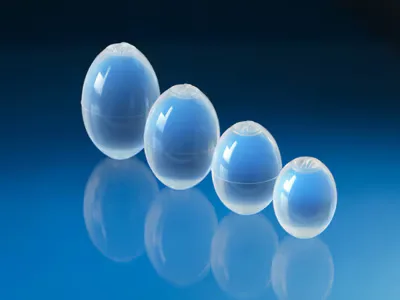
- The name covers two different devices — A pre-1995 silicone gel-filled prosthesis and a post-2002 saline-filled prosthesis.
- The saline device still exists under a different name — It is marketed today by Coloplast as the Torosa.
- Mentor no longer exists as a separate urology company — Coloplast acquired the business in 2006.
- The trial was substantial for its field — Turek and colleagues reported on the saline prosthesis with no connective tissue diseases identified and high patient satisfaction.
- Testicular implants are not lifetime devices — Coloplast's own patient labelling states that testicular implants should not be considered lifetime implants and require replacement surgery over time.
- If yours is a gel implant from before 1995, get it assessed — That is a materially different situation from a saline implant placed in 2005.
About the Mentor Testicular Prosthesis
What Does "Mentor Testicular Prosthesis" Mean?
This is the first thing the page needs to sort out, because the phrase is ambiguous.
Mentor Corporation manufactured testicular prostheses across two distinct periods, using two different fillers.
Before 1995, Mentor was one of the companies producing silicone gel-filled testicular prostheses.
After that, Mentor developed a saline-filled silicone rubber shell testicular prosthesis, which went through clinical trial and received regulatory approval.
If you have been told you have a Mentor testicular implant, the year it was placed tells you which one you have.
The Silicone Gel Era and 1995
Testicular prostheses have been used for around 50 years.
In 1995, manufacture of the silicone gel-filled testis prosthesis in the United States was discontinued because of concern about the safety profiles of other silicone implants.
The concern was not driven by testicular implant data specifically. It came out of the wider controversy over silicone gel breast implants and possible connective tissue disease.
The effect was that American patients were left with no approved testicular prosthesis at all for several years.
The Saline Replacement
Mentor Corporation developed a saline-filled silicone rubber shell testicular prosthesis as the answer.
The shell remained silicone. The filler changed to sterile saline.
The reasoning is straightforward: if silicone gel migration was the concern, a device filled with saline removes it. Saline that leaks from a ruptured shell is simply absorbed by the body.
The Clinical Trial
The saline device was tested properly, which is unusual for this category.
The study was an open-label, multicentre, prospective, case-controlled clinical trial conducted at 18 American tertiary referral centres, described elsewhere as a five-year programme.
Adult and paediatric male patients missing one or two testes, without active malignancy or rheumatological disease, were enrolled.
Every patient underwent formal rheumatological and urological evaluation both before and after implantation, because answering the autoimmune question was the point of the exercise.
A one-year follow-up report by Turek and colleagues involving 149 patients using this prosthesis found no connective tissue diseases and high patient satisfaction.
The published conclusion was that the saline-filled testicular prosthesis can be implanted with few complications and with a low or absent risk of rheumatological disease.
FDA Approval in 2002
Saline-filled silicone testicular prostheses received FDA approval in 2002.
That approval is the foundation of the current claim that the Torosa is the only FDA-approved testicular implant on the market.
The approval came through the premarket approval pathway rather than a 510(k) clearance, and has been amended by supplements since, including one implementing a size inspection step during manufacturing.
The Coloplast Acquisition
Coloplast completed its acquisition of Mentor Corporation's urology business in June 2006, which is what allowed Coloplast to expand into men's urologic health.
The testicular prosthesis line went with it.
The same product family that Mentor developed is marketed today by Coloplast as the Torosa Saline-Filled Testicular Prosthesis.
This is the same corporate story as the Mentor Alpha-1 penile prosthesis, which became the Coloplast Titan. Mentor's better products survived the acquisition under new names; the weaker ones, like the GFS two-piece penile implant, did not.
What the Device Is
The device that carries the lineage forward is a silicone elastomer shell filled with sterile saline during surgery.
It has a self-sealing injection port that allows filling with sterile saline solution, and a suture tab that enables secure placement in a set position, eliminating unwanted movement within the scrotum.
It is supplied in four sizes covering adult, adolescent and paediatric patients: extra small at 7 cc, small at 11 cc, medium at 16 cc and large at 20 cc.
Full current specifications belong on the Torosa page rather than here.
If You Have a Mentor Implant From Before 1995
This is the group that most needs a clear answer.
A testicular prosthesis placed before 1995 may be a silicone gel-filled device.
Those devices were withdrawn from the US market, and the manufacturer no longer exists as a separate company.
That does not mean the implant must come out. Analyses of silicone testicular implants did not establish the connective tissue disease link that was feared, and the subsequent saline trial found no connective tissue diseases.
It does mean the implant is now three decades old, and Coloplast's own current labelling states that due to the nature of silicone implants, testicular implants should not be considered lifetime implants and require replacement surgery over time.
If it is comfortable, sits normally and shows no sign of hardening, change in shape or skin problems, there is no urgent action. If any of those things are present, see a urologist.
If You Have a Mentor Implant From 1996 Onwards
You most likely have the saline-filled device.
This is the same product still being manufactured today under the Torosa name, so a surgeon who works with Torosa will know exactly what is in your scrotum.
The same lifespan caveat applies. An implant placed in 2003 is now over twenty years old and past the point where replacement is a reasonable conversation to have.
Signs Your Implant Needs Assessment
Any of the following warrant a urology appointment regardless of which era your implant is from:
The prosthesis has become noticeably smaller or softer, which in a saline device suggests leakage.
It has become harder or changed shape, which suggests capsular contracture.
It has moved position, riding upward or sitting asymmetrically.
There is pain, redness, skin thinning or any discharge.
The scrotal skin over the implant looks stretched or shiny.
What Happens if a Saline Implant Leaks
The saline is absorbed harmlessly.
What you notice is the prosthesis shrinking or going soft over days or weeks.
The empty shell remains and needs removal or replacement.
This is not an emergency, but it should not be ignored either, since the deflated shell can fold and become uncomfortable.
Replacement Surgery
Replacing an old testicular prosthesis is generally a simpler operation than replacing a penile implant.
The old device is removed through a scrotal incision and a new one placed in the same pocket where tissue conditions allow.
Capsular tissue may need to be released if it has contracted around the old implant.
Current devices offer options Mentor's did not, including Rigicon's Testi10 range with three constructions and five sizes.
Removal Without Replacement
Some men choose removal without a new implant, particularly decades after the original surgery.
Unlike penile implant explantation, this carries no functional consequence, because a testicular prosthesis never had a function to lose.
The result is an empty scrotal compartment on that side, with the cosmetic outcome the man had before the original implant.
The scrotal pocket may contract after removal, which can make later reimplantation more difficult.
What a Mentor Testicular Implant Never Did
Worth restating for anyone who has carried one for decades and is unsure.
The prosthesis is cosmetic. It produces no testosterone and no sperm.
It never affected fertility, libido, erectile function or hormone levels.
Men missing both testicles needed testosterone replacement then and still do.
Autoimmune and Silicone Concerns
Men with older implants sometimes worry about this, so the page should address it directly.
The 1995 withdrawal of gel-filled testicular prostheses was precautionary and driven by the broader silicone implant controversy rather than by testicular implant evidence.
The saline device's trial was designed specifically to test the question, included formal rheumatological evaluation before and after implantation, and found a low or absent risk of rheumatological disease.
Current Coloplast labelling still advises that risks and benefits be carefully considered in patients with lupus, scleroderma, myasthenia gravis or documented silicone sensitivity, and notes the relationship between silicone and various diseases remains a subject of scientific and medical debate.
If you have developed an autoimmune condition and have an old implant, that is a conversation to have with a rheumatologist and a urologist rather than a reason to panic.
MRI With an Older Mentor Implant
Flag for verification before publishing. No MRI conditions statement could be located for either the Mentor-branded testicular prosthesis or the current Torosa.
Recommended page wording: tell radiology staff about the implant before any scan, and note the approximate year it was placed, since gel-filled and saline-filled devices behave differently on imaging.
Do not label either device MR Conditional or MR Safe without a manufacturer document.
Regulatory Status Today
The Mentor brand name is no longer used for testicular prostheses.
The product line is now the Coloplast Torosa, which holds the FDA approval originally granted in 2002 and is described as the only FDA-approved testicular implant on the market.
Nothing bearing the Mentor name is currently supplied.
Warranty
There is no warranty on a Mentor-branded testicular prosthesis.
Mentor Corporation's urology business no longer exists as a separate entity and no manufacturer replacement programme applies to devices sold under that name.
Warranty terms for the current Torosa should be confirmed directly with Coloplast, and could not be verified from public sources.
Why This Page Exists
Nobody can choose a Mentor testicular prosthesis today.
The page matters for two reasons.
First, men who had one implanted between the 1980s and 2006 were told they had a Mentor implant, and that is the term they search for. They need to know the device still exists under another name, that implants of this type are not lifetime devices, and what signs mean it should be looked at.
Second, the lineage is genuinely useful context for anyone choosing an implant now. The Torosa is not a new device that appeared in 2006. It is a Mentor design with two decades of accumulated use behind it, and that history is part of the case for it.
Is this device for you?
- •Men told they have a Mentor testicular implant who want to know what it is and whether it still exists.
- •Men with an implant placed before 1995 who are unsure whether they have a gel-filled device.
- •Men with a decades-old implant wondering whether it needs replacing.
- •Men whose implant has changed size, shape or position and who need to know that warrants assessment.
- •Men worried about silicone and autoimmune disease who want the actual evidence rather than rumour.
- •Patients researching the Coloplast Torosa who want to understand where it came from.
- •The brand no longer exists — No Mentor-branded testicular prosthesis is supplied, and no warranty applies.
- •Two different devices share the name — Gel-filled before 1995, saline-filled after.
- •Not a lifetime implant — Current labelling for the successor device states testicular implants require replacement surgery over time.
- •Deflation is the characteristic saline failure — The prosthesis shrinks or softens as saline is absorbed.
- •Capsular contracture is possible — Hardening or shape change around an old implant.
- •Migration and extrusion remain the main complications — As with any testicular prosthesis.
- •Silicone questions persist in labelling — Current guidance still advises caution in lupus, scleroderma, myasthenia gravis and documented silicone sensitivity.
- •No MRI statement located — For either the historic device or its successor.
- •Cosmetic only — It never produced hormones or sperm.
How it compares
Every testicular prosthesis a surgeon in our network may propose, side by side. The Mentor Testicular Prosthesis column is highlighted.
| Attribute | Mentor Testicular ProsthesisMentor CorporationMid-range | Testi10™ Testicular ProsthesisRigicon, Inc.Premium | Torosa® Saline-Filled Testicular ProsthesisColoplastMid-range |
|---|---|---|---|
| Fill type | Saline — filled intraoperatively with sterile, isotonic, pyrogen-free Sodium Chloride USP. Pre-1995 Mentor devices were silicone gel-filled. | Three options — solid silicone (Firm), sterile saline filled during surgery (Saline-Filled), sterile saline filled at manufacture (Saline) | Saline — filled intraoperatively with sterile, isotonic, pyrogen-free Sodium Chloride USP |
| Shell material | Silicone elastomer | Medical-grade silicone elastomer | Solid silicone elastomer |
| Fill port | Self-sealing injection port | Present on the Saline-Filled model for intraoperative filling; not applicable to the Firm model | Self-sealing injection port |
| Fixation | Suture tab; fixation at the surgeon's discretion | Mesh for easy fixation in the scrotum on the Firm model | Suture tab at the lower pole; fixation optional at the surgeon's discretion |
| Sizes | Four in current form — 7 cc, 11 cc, 16 cc and 20 cc | Five per model — XS, S, M, L, XL Firm model published dimensions: XS 2.7 × 2.1 cm, 6 cc; S 3.2 × 2.6 cm, 12 cc; M 4.1 × 2.9 cm, 18 cc; L 4.7 × 3.2 cm, 22 cc; XL 5.1 × 3.2 cm, 26 cc | Extra small 2.2 × 3.0 cm, 7 cc / Small 2.5 × 3.5 cm, 11 cc Medium 2.7 × 4.0 cm, 16 cc / Large 2.9 × 4.5 cm, 20 cc |
| Placement | Entirely intrascrotal | Entirely intrascrotal | Entirely intrascrotal; typically an outpatient procedure |
| Timing | At orchiectomy or as a delayed secondary procedure | At orchiectomy or as a delayed secondary procedure | At orchiectomy or as a delayed secondary procedure |
| Endocrine function | None — cosmetic replacement only | None — cosmetic replacement only | None — cosmetic replacement only |
| Expected lifespan | Not a lifetime implant; replacement surgery expected over time | — | — |
| MRI status | Not verified — no manufacturer statement located for either the historic or current device | MR Conditional per the manufacturer, under conditions described in Rigicon's literature; obtain the specific conditions document | Not verified — no manufacturer statement located; confirm before publishing |
| Antibiotic or hydrophilic coating | — | None specified by the manufacturer for this device | None specified by the manufacturer |
| Reliability | 90–95% at 5 yrs* | 90–95% at 5 yrs* | 90–95% at 5 yrs* |
*Type-level five-year mechanical survival from published series; not a model-specific figure. See each model page for detail.
At a glance
- Manufacturer
- Mentor Corporation
- Type
- Testicular prosthesis
- Price tier
- Mid-range
- Warranty
- Mentor Corporation's urology business was acquired by Coloplast in 2006 and no device is supplied under the Mentor name. No manufacturer warranty, replacement programme or parts supply exists for a Mentor-branded testicular prosthesis. Men requiring removal or exchange of an existing device are treated under standard revision pathways. Warranty terms for the current Coloplast Torosa should be confirmed directly with Coloplast before surgery.
- Saline-filled silicone shell — Developed as the replacement for withdrawn gel-filled prostheses.
- Self-sealing injection port — Filled by the surgeon during the operation.
- Suture fixation tab — Prevents unwanted movement within the scrotum.
- Four sizes — 7 cc, 11 cc, 16 cc and 20 cc in current form.
- FDA approved since 2002 — Through the premarket approval pathway.
- Trial-tested for autoimmune risk — Formal rheumatological evaluation before and after implantation.
- Now sold as the Coloplast Torosa — Following the 2006 acquisition.
- Mentor branding discontinued — No device is currently supplied under that name.
Surgeons who implant it
Surgeons in our network who work with the Mentor Testicular Prosthesis. Availability of a specific model is always confirmed in your proposal.
Common questions
What is a Mentor testicular prosthesis?
Is the Mentor testicular prosthesis still made?
Is the Torosa the same as the Mentor implant?
How do I know which Mentor implant I have?
I have a gel-filled implant from the 1980s. Is it dangerous?
Do testicular implants last forever?
My implant has gone soft or shrunk. What does that mean?
My implant has gone hard or changed shape. What does that mean?
Can a Mentor implant be replaced?
Can I have it removed without a replacement?
Did the implant ever produce testosterone?
I have developed an autoimmune condition. Is my implant responsible?
Can I have an MRI with a Mentor testicular implant?
Is there any warranty on my Mentor implant?
Patient reviews
Been treated? Your honest review of Mentor Testicular Prosthesis helps the next patient.
No one has reviewed this yet. If you have been treated, your experience would help the next person.
Write the first reviewSources
- Zhang et al. — Advances and Clinical Applications of Testicular Prostheses (Andrologia 2025)
- Turek & Master — Safety and Effectiveness of a New Saline Filled Testicular Prosthesis (J Urol 2004;172:1427–30)
- Coloplast — Torosa Saline-Filled Testicular Prosthesis (professional product page)
- Coloplast — Torosa Patient Guide (PDF)
- Coloplast — Torosa Sizing Guide and Brief Statement (PDF)
- Coloplast completes acquisition of Mentor Corporation's urology business
- Robinson et al. — Is it safe to insert a testicular prosthesis at the time of radical orchidectomy for testis cancer (BJU Int 2016)
- Hayon, Michael & Coward — The modern testicular prosthesis: patient selection and counseling, surgical technique, and outcomes (Asian J Androl 2020)
- Mentor Corporation — product information